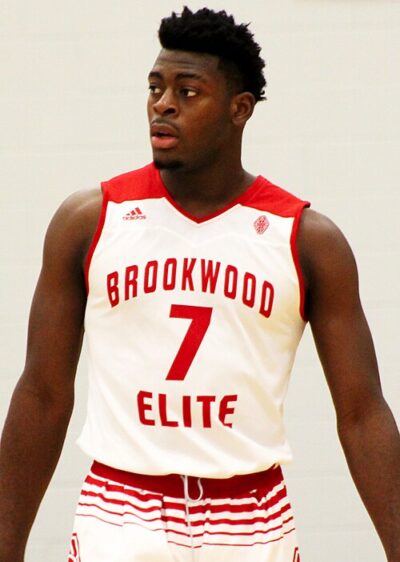
Pacific-12 Conference Men's Basketball Freshman of the Year
Pacific-12 Conference Men's Basketball Freshman of the Year is an award. It was created in 1979.
- Country
- United States
- Created
- 1979
All 3 facts, and where they come from
Facts
3 facts · 0 confirmed by two sources · 0 cited · 3 from one source
Where this comes from
Papalocal keeps its own record. It started from these sources; what each one said is kept here as it was copied, so a change on their side never changes this page by itself. Tap one to read its version.
What Wikidata says · copied November 17, 2026 · revision 1353641307
- What it is
- award
- Created
- 1979
- Country
- United States
- Wikipedias with a page
- 1
Wikidata item Q20685058 (wikidata.org/wiki/Q20685058), public domain (CC0). Copied 2026-11-17.
What Wikipedia says · copied November 17, 2026 · revision 1386215868
The Pac-12 Freshman of the Year is an annual award in the Pac-12 Conference presented to its top freshman player in men's basketball. The winner is chosen by the Pac-12 coaches. The honor began in 1978–79, when it was known as the Rookie of the Year and players in their first year in the conference, including transfers, were eligible. Junior guard Bryan Rison of Washington State was the first honoree and the only non-freshman to ever win. The candidates were limited to freshman starting in 1983–84, when the award was renamed to Freshman of the Year. The conference was known as the Pacific-10 before becoming the Pac-12 in 2011. Four winners were also named the conference's player of the year in the same year: Shareef Abdur-Rahim (California, 1996), Kevin Love (UCLA, 2008), Deandre Ayton (Arizona, 2018) and Evan Mobley (USC, 2021).
From the Wikipedia article “Pac-12 Conference Men's Basketball Freshman of the Year” (en.wikipedia.org/wiki/Pac-12_Conference_Men's_Basketball_Freshman_of_the_Year), by its contributors, under CC BY-SA 4.0 (creativecommons.org/licenses/by-sa/4.0/). Copied 2026-11-17; not changed.
Confirmed Two sources agree. Cited One source, and it names where it got it. One source One source, without a reference of its own. Sources disagree The sources disagree. We show the best-supported value and keep theirs below.