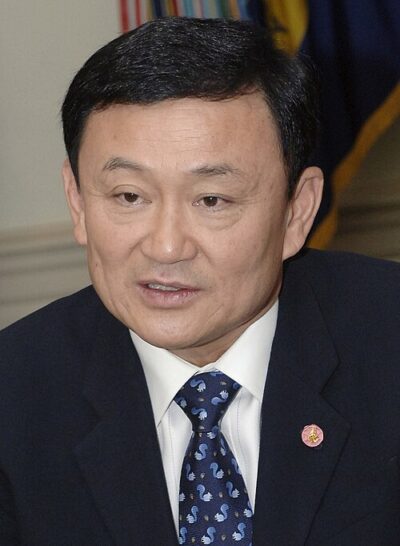
Palang Dharma Party
The Palang Dharma Party is a political party in Thailand. It was founded in 1988.
- Country
- Thailand
- Founded
- 1988
- Chair
- Chamlong Srimuang
All 5 facts, and where they come from
Facts
5 facts · 0 confirmed by two sources · 0 cited · 5 from one source
Where this comes from
Papalocal keeps its own record. It started from these sources; what each one said is kept here as it was copied, so a change on their side never changes this page by itself. Tap one to read its version.
What Wikidata says · copied November 17, 2026 · revision 2507285123
- Described as
- political party in Thailand
- Other names
- Phak Phalang Tham
- What it is
- political party
- Founded
- 1988
- Ended
- 2007
- Country
- Thailand
- Chair
- Chamlong Srimuang
- Wikipedias with a page
- 4
Wikidata item Q1127750 (wikidata.org/wiki/Q1127750), public domain (CC0). Copied 2026-11-17.
What Wikipedia says · copied November 17, 2026 · revision 1384447479
The Palang Dharma Party (Thai: พรรคพลังธรรม, RTGS: Phak Phalang Tham; translated as "power of Dharma", or "moral force", PDP for short) was a Buddhist-inspired political party in Thailand founded by Chamlong Srimuang in 1988, associated with the Santi Asoke sect of Buddhism. The Thai word tham can be used to refer both to "morality", and "dharma", the teachings of Buddhism. Phak Phalang Tham was a political party, not to be confused with its precursor, Ruam Phalang ("collective force"), the campaign group that backed Chamlong Srimuang in the 1985 Bangkok gubernatorial election. To some extent, the PDP evolved into a political party from Ruam Phalang. The latter group was largely made up of Santi Asoke devotees, former Young Turks, and other political activists and community leaders. Many of the PDP's early members were drawn from the ranks of Ruam Phalang.
From the Wikipedia article “Palang Dharma Party” (en.wikipedia.org/wiki/Palang_Dharma_Party), by its contributors, under CC BY-SA 4.0 (creativecommons.org/licenses/by-sa/4.0/). Copied 2026-11-17; not changed.
Confirmed Two sources agree. Cited One source, and it names where it got it. One source One source, without a reference of its own. Sources disagree The sources disagree. We show the best-supported value and keep theirs below.