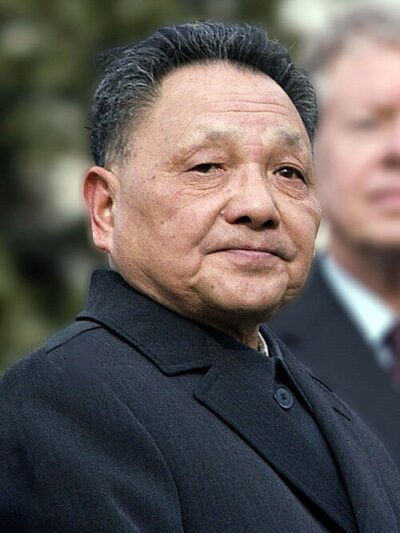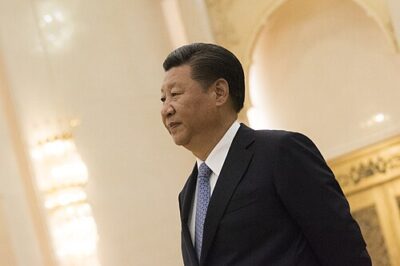
paramount leader of the People's Republic of China
The paramount leader of the People's Republic of China is an unofficial title of the de facto head of state in China, usually the General Secretary or Chairman of the Chinese Communist Party. It was created in 1949.
- Office of
- People's Republic of China
- Country
- People's Republic of China
- Created
- October 1, 1949
All 4 facts, and where they come from
Facts
4 facts · 0 confirmed by two sources · 0 cited · 4 from one source
Where this comes from
Papalocal keeps its own record. It started from these sources; what each one said is kept here as it was copied, so a change on their side never changes this page by itself. Tap one to read its version.
What Wikidata says · copied November 17, 2026 · revision 2568947250
- Described as
- an unofficial title of the de facto head of state in China, usually the General Secretary or Chairman of the Chinese Communist Party
- Other names
- Chinese leader, leader of China, Paramount leader of China, Supreme leader of China
- What it is
- position
- Created
- October 1, 1949
- Country
- People's Republic of China
- Office of
- People's Republic of China
- Wikipedias with a page
- 29
Wikidata item Q50684 (wikidata.org/wiki/Q50684), public domain (CC0). Copied 2026-11-17.
What Wikipedia says · copied November 17, 2026 · revision 1384657819
Paramount leader (Chinese: 最高领导人; pinyin: Zuìgāo Lǐngdǎorén) is an informal term for the most important political figure of the People's Republic of China (PRC). The paramount leader typically controls the Chinese Communist Party (CCP) and the People's Liberation Army (PLA), often holding the titles of CCP General Secretary and Chairman of the Central Military Commission (CMC). The state representative (president) or head of government (premier) are not necessarily paramount leader; under China's party-state system, CCP roles are politically more important than state titles.
The current paramount leader is Xi Jinping, who is considered to have taken on the role in November 2012 since assuming the position of CCP general secretary, rather than in March 2013 when he succeeded Hu Jintao as president.
The paramount leader is not a formal position nor an office unto itself. The term gained prominence during the era of Deng Xiaoping (1978–1989), when he was de facto able to wield political power without holding any official or formally significant party or government positions at any given time (state representative, head of government or leader of the CCP), but the Chairman of the CCP Central Military Commission (1981–1989). As the leader of the world's largest economy by GDP purchasing power parity (PPP), the second-largest economy by nominal GDP, and a potential superpower, the paramount leader is considered to be one of the world's most powerful political figures.
There has been significant overlap between paramount leader status and leadership core status, with a majority but not all of paramount leaders being also leadership cores, though they are separate concepts. The term has been used less frequently to describe Deng's successors, Jiang Zemin, Hu Jintao and Xi Jinping, who have all formally held the offices of General Secretary of the Chinese Communist Party (party leader), President of China (state representative) and Chairman of the Central Military Commission (commander-in-chief). Jiang, Hu and Xi are therefore usually referred to as president in the international scene, the title used by most other republican heads of state. However, Deng's successors derive their real power from the post of general secretary, which is the primary position in the Chinese power structure and generally regarded by scholars as the post whose holder can be considered paramount leader. The presidency is a largely ceremonial office according to the Constitution, and the most powerful position in the Chinese political system is the CCP general secretary. The general secretary has been the highest-ranking official in China's political system since 1982. Since Mao every paramount leader developed his own philosophy.
From the Wikipedia article “Paramount leader” (en.wikipedia.org/wiki/Paramount_leader), by its contributors, under CC BY-SA 4.0 (creativecommons.org/licenses/by-sa/4.0/). Copied 2026-11-17; not changed.
Confirmed Two sources agree. Cited One source, and it names where it got it. One source One source, without a reference of its own. Sources disagree The sources disagree. We show the best-supported value and keep theirs below.
Picture: Dominique A. Pineiro, U.S. Navy Petty Officer 1st Class, via Wikimedia Commons · Public domain