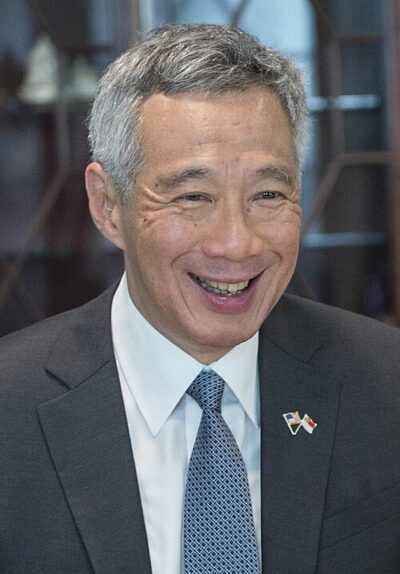
Parliament of Singapore
The Parliament of Singapore is a legislature of Singapore. It was founded in 1965. Its headquarters are in Parliament House.
- Founded
- August 9, 1965
- Headquarters
- Parliament House
- Country
- Singapore
All 7 facts, and where they come from
Facts
7 facts · 0 confirmed by two sources · 0 cited · 7 from one source
Where this comes from
Papalocal keeps its own record. It started from these sources; what each one said is kept here as it was copied, so a change on their side never changes this page by itself. Tap one to read its version.
What Wikidata says · copied November 17, 2026 · revision 2559614231
- Described as
- legislature of Singapore
- Other names
- Parliament of the Republic of Singapore, Singapore Parliament
- What it is
- parliament; unicameral legislature
- Founded
- August 9, 1965
- Headquarters
- Parliament House
- Country
- Singapore
- Office of
- Singapore
- Official website
- https://www.parliament.gov.sg/
- Wikipedias with a page
- 27
Wikidata item Q1517231 (wikidata.org/wiki/Q1517231), public domain (CC0). Copied 2026-11-17.
What Wikipedia says · copied November 17, 2026 · revision 1383677693
The Parliament of Singapore is the unicameral legislature of the Republic of Singapore, which exercises the legislative power of the country alongside the President of Singapore. Based on the Westminster system, it consists of elected Members of Parliament (MPs), Non-constituency MPs (NCMPs) and Nominated MPs (NMPs). Following the 2025 general election, 97 MPs from two political parties, the governing People's Action Party (PAP) and the opposition Workers' Party (WP), were elected to the 15th Parliament. 2 NCMPs from the latter were also appointed ("elected" in the language of Singaporean law). Nine NMPs are usually appointed by the president on a biennial basis.
The Speaker of Parliament presides over sittings and oversees the administration of Parliament. The Leader of the House is appointed by the prime minister to manage government business and the legislative programme, while the Leader of the Opposition leads the largest political party not in government, and is appointed by the prime minister. Some work is carried out by select committees of MPs. Standing committees are permanent, while ad hoc committees are established to examine specific matters, including bills. Selected backbenchers of the PAP also serve on Government Parliamentary Committees (GPCs) to review policies, programmes and proposed legislation of government ministries.
Parliament's main functions are lawmaking, managing the nation's finances and ensuring ministerial accountability. It convenes during sessions, with the first session commencing after a general election. A session ends when Parliament is prorogued or dissolved, and each Parliament has a maximum term of five years, after which a general election must be held within three months. The quorum for a sitting is one quarter of MPs, excluding the speaker. Debates begin when an MP moves a motion and delivers an opening speech, after which other MPs may participate. The mover may exercise a right of reply, and the speaker then puts the motion to a vote, with formal counting only if an MP requests a division.
Since 1990, Parliament has comprised elected, non-constituency and nominated MPs. Parliamentary committees and structured debates are used to review legislation, examine government policies and facilitate parliamentary business. Parliament first convened at the Old Parliament House from 1965 to 1999, before moving to the current Parliament House on 6 September 1999.
From the Wikipedia article “Parliament of Singapore” (en.wikipedia.org/wiki/Parliament_of_Singapore), by its contributors, under CC BY-SA 4.0 (creativecommons.org/licenses/by-sa/4.0/). Copied 2026-11-17; not changed.
Confirmed Two sources agree. Cited One source, and it names where it got it. One source One source, without a reference of its own. Sources disagree The sources disagree. We show the best-supported value and keep theirs below.
Picture: Wikimedia Commons: Singaporeparliament2012.JPG · See Commons file page