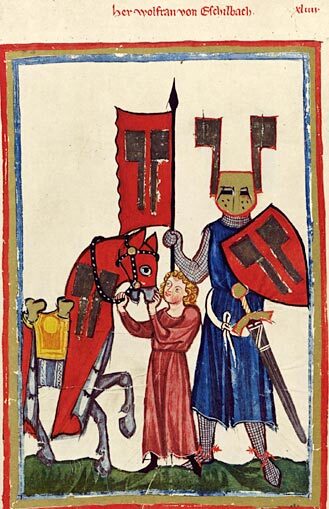
Parzival
Parzival is a medieval German romance by Wolfram von Eschenbach. It came out in 1200.
- Came out
- 1200
- Written by
- Wolfram von Eschenbach
- Genre
- chivalric romance
- Country of origin
- Germany
All 7 facts, and where they come from
Facts
7 facts · 0 confirmed by two sources · 1 cited · 6 from one source
Where this comes from
Papalocal keeps its own record. It started from these sources; what each one said is kept here as it was copied, so a change on their side never changes this page by itself. Tap one to read its version.
What Wikidata says · copied November 17, 2026 · revision 2541533795
- Described as
- medieval German romance by Wolfram von Eschenbach
- What it is
- literary work
- Written by
- Wolfram von Eschenbach · 1 reference
- Genre
- chivalric romance; Arthurian romance
- Language
- Middle High German
- Country of origin
- Germany · 1 reference
- Came out
- 1200 · 1 reference
- Wikipedias with a page
- 37
Wikidata item Q1247232 (wikidata.org/wiki/Q1247232), public domain (CC0). Copied 2026-11-17.
What Wikipedia says · copied November 17, 2026 · revision 1376312657
Parzival (German pronunciation: [ˈpaʁtsifal]) is a medieval chivalric romance by the poet and knight Wolfram von Eschenbach in Middle High German. The poem, commonly dated to the first quarter of the 13th century, centers on the Arthurian hero Parzival (Percival in English) and his long quest for the Holy Grail following his initial failure to achieve it.
Parzival begins with the knightly adventures of Parzival's father, Gahmuret, his marriage to Herzeloyde (Middle High German: herzeleide, "heart's sorrow"), and the birth of Parzival. The story continues as Parzival meets three elegant knights, decides to seek King Arthur, and continues a spiritual and physical search for the Grail. A long section is devoted to Parzival's friend Gawan and his adventures defending himself from a false murder charge and winning the hand of the maiden Orgeluse. Among the most striking elements of the work are its emphasis on the importance of humility, compassion, sympathy and the quest for spirituality. A major theme in Parzival is love: heroic acts of chivalry are inspired by true love, which is ultimately fulfilled in marriage.
Regarded as one of the masterpieces of the Middle Ages, the romance was the most popular vernacular verse narrative in medieval Germany, and continues to be read and translated into modern languages around the world. Wolfram began a prequel, Titurel, which was later continued by another writer, while two full romances were written adapting Wolfram's story of Loherangrin. Richard Wagner based his famous opera Parsifal, finished in 1882, on Parzival.
From the Wikipedia article “Parzival” (en.wikipedia.org/wiki/Parzival), by its contributors, under CC BY-SA 4.0 (creativecommons.org/licenses/by-sa/4.0/). Copied 2026-11-17; not changed.
Confirmed Two sources agree. Cited One source, and it names where it got it. One source One source, without a reference of its own. Sources disagree The sources disagree. We show the best-supported value and keep theirs below.
Picture: Wikimedia Commons: Parzival.Lauber.jpg · See Commons file page