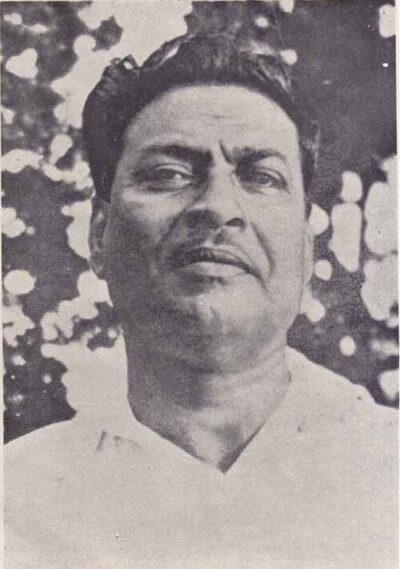
Pather Panchali
Pather Panchali is a novel by Bibhutibhushan Bandyopadhyay. It came out in 1929.
- Published
- 1929
- Written by
- Bibhutibhushan Bandyopadhyay
- Genre
- Bildungsroman
- Country of origin
- British Raj
All 7 facts, and where they come from
Facts
7 facts · 0 confirmed by two sources · 0 cited · 7 from one source
Where this comes from
Papalocal keeps its own record. It started from these sources; what each one said is kept here as it was copied, so a change on their side never changes this page by itself. Tap one to read its version.
What Wikidata says · copied November 17, 2026 · revision 2505723829
- Described as
- novel by Bibhutibhushan Bandyopadhyay
- What it is
- literary work
- Written by
- Bibhutibhushan Bandyopadhyay
- Genre
- Bildungsroman
- Published
- 1929
- Language
- Bangla
- Country of origin
- British Raj
- Followed by
- Aparajito
- Wikipedias with a page
- 10
Wikidata item Q2948187 (wikidata.org/wiki/Q2948187), public domain (CC0). Copied 2026-11-17.
What Wikipedia says · copied November 17, 2026 · revision 1384289186
Pather Panchali (Pôther Pãchali; transl. Song of the Little Road) is a 1929 novel written by Bibhutibhushan Bandyopadhyay and was later adapted into a 1955 film of the same name by Satyajit Ray. Considered to be one of the greatest literary works describing rural life, Pather Panchali deals with the life of the Roy family, both in their ancestral village in rural Bengal and later when they move to Varanasi in search of a better life, as well as the anguish and loss they face during their travels.
From the Wikipedia article “Pather Panchali (novel)” (en.wikipedia.org/wiki/Pather_Panchali_(novel)), by its contributors, under CC BY-SA 4.0 (creativecommons.org/licenses/by-sa/4.0/). Copied 2026-11-17; not changed.
Confirmed Two sources agree. Cited One source, and it names where it got it. One source One source, without a reference of its own. Sources disagree The sources disagree. We show the best-supported value and keep theirs below.