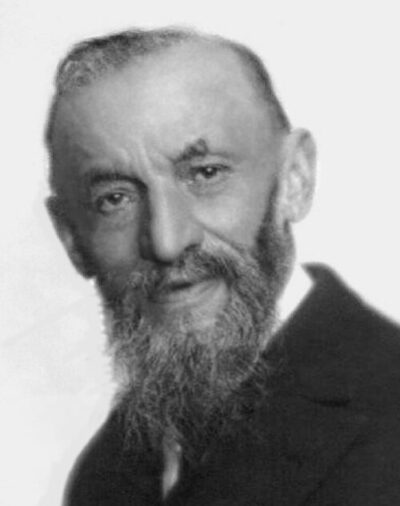
Peano axioms
Peano axioms is an axiomatic system for the natural numbers.
All 3 facts, and where they come from
Facts
3 facts · 0 confirmed by two sources · 0 cited · 3 from one source
Where this comes from
Papalocal keeps its own record. It started from these sources; what each one said is kept here as it was copied, so a change on their side never changes this page by itself. Tap one to read its version.
What Wikidata says · copied November 17, 2026 · revision 2492523770
- Described as
- axiomatic system for the natural numbers
- Other names
- Dedekind–Peano axioms, Peano postulates
- What it is
- axiomatic system
- Named after
- Giuseppe Peano; Richard Dedekind
- Wikipedias with a page
- 38
Wikidata item Q842755 (wikidata.org/wiki/Q842755), public domain (CC0). Copied 2026-11-17.
What Wikipedia says · copied November 17, 2026 · revision 1384761040
In mathematical logic, the Peano axioms (; [peˈaːno]), also known as the Dedekind–Peano axioms or the Peano postulates, are axioms for the natural numbers presented by the 19th-century Italian mathematician Giuseppe Peano. These axioms have been used nearly unchanged in a number of metamathematical investigations, including research into fundamental questions of whether number theory is consistent and complete.
The axiomatization of arithmetic provided by Peano axioms is commonly called Peano arithmetic.
The importance of formalizing arithmetic was not well appreciated until the work of Hermann Grassmann, who showed in the 1860s that many facts in arithmetic could be derived from more basic facts about the successor operation and induction. In 1881, Charles Sanders Peirce provided an axiomatization of natural-number arithmetic. In 1888, Richard Dedekind proposed another axiomatization of natural-number arithmetic, and in 1889, Peano published a simplified version of them as a collection of axioms in his book The principles of arithmetic presented by a new method (Latin: Arithmetices principia, nova methodo exposita).
Peano’s axioms can be divided into groups according to their subject matter. The first axiom asserts the existence of at least one member of the set of natural numbers. The next four are general statements about equality; in modern treatments these are often not taken as part of the Peano axioms, but rather as axioms of the "underlying logic". The next three axioms are first-order statements about natural numbers expressing the fundamental properties of the successor operation. The ninth, final, axiom is a second-order statement of the principle of mathematical induction over the natural numbers, which makes this formulation close to second-order arithmetic. A weaker first-order system is obtained by explicitly adding the addition and multiplication operation symbols and replacing the second-order induction axiom with a first-order axiom schema. The term Peano arithmetic is sometimes used for specifically naming this restricted system.
From the Wikipedia article “Peano axioms” (en.wikipedia.org/wiki/Peano_axioms), by its contributors, under CC BY-SA 4.0 (creativecommons.org/licenses/by-sa/4.0/). Copied 2026-11-17; not changed.
Confirmed Two sources agree. Cited One source, and it names where it got it. One source One source, without a reference of its own. Sources disagree The sources disagree. We show the best-supported value and keep theirs below.