People's Party (Bulgaria)
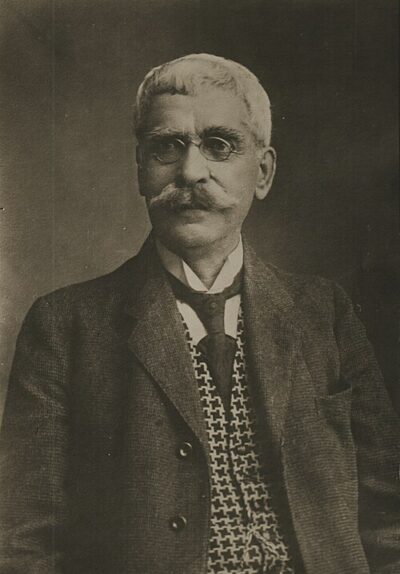
People's Party (Bulgaria) is a Bulgarian Political Party. It was founded in 1894 by Konstantin Stoilov.
- Country
- Bulgaria
- Founded
- 1894
All 5 facts, and where they come from
Facts
5 facts · 0 confirmed by two sources · 0 cited · 5 from one source
Where this comes from
Papalocal keeps its own record. It started from these sources; what each one said is kept here as it was copied, so a change on their side never changes this page by itself. Tap one to read its version.
What Wikidata says · copied November 17, 2026 · revision 2518714191
- Described as
- Bulgarian Political Party
- What it is
- political party in Bulgaria
- Founded
- 1894
- Ended
- 1920
- Founded by
- Konstantin Stoilov
- Country
- Bulgaria
- Wikipedias with a page
- 8
Wikidata item Q2918912 (wikidata.org/wiki/Q2918912), public domain (CC0). Copied 2026-11-17.
What Wikipedia says · copied November 17, 2026 · revision 1357778287
The People's Party, also rendered as National or Nationalist Party (Bulgarian: Народна партия, romanized: Narodna partiya, NP, or Narodnyatsite, "Populists"), was a political group in Bulgaria, active between 1894 and 1920—during the country's existence as an autonomous principality and independent kingdom. A paternalistic-conservative force challenging and replacing the People's Liberal Party, it was founded and led until 1901 by Konstantin Stoilov, and thereafter by Ivan Evstratiev Geshov. First organizing in Ruse as an outgrowth of the Svobodno Slovo alliance, it traced its more distant origins to the Conservative Party, which had functioned in Bulgaria-proper during the early 1880s, and to the People's Party of Eastern Rumelia. All these groups were tightly oligarchic, alternating between a public embrace of liberal conservatism and a more ingrained commitment to paternalistic conservatism; beyond this, they supported a moderate version of Bulgarian nationalism, and had a foreign policy that was primarily centered on Russophilia. Unlike other Russophilic parties, the NP advocated for tight relations with Romania.
Stoilov was made prime minister by Knyaz Ferdinand I, in lieu of the disgraced and murdered Stefan Stambolov; in exchange, he agreed to endorse Ferdinand's absolutist tendencies, and also helped him win over support from the Russian Empire. The newly formed NP won the parliamentary elections of 1894, upon which Stoilov consolidated his political machine. Geshov, appointed Minister of Finance, helped with structural reforms that promoted economic nationalism and social corporatism, also inaugurating a lang-standing conflict with the Ottoman Empire over the ownership of Bulgarian railways. The NP government clamped down on Stambolovists and left-wing adversaries, and went back on its initial promise to uphold press freedoms. By 1895, Stoilov had turned into a follower of the Tarnovo Constitution, trying to dissociate himself from Ferdinand's policies. His cabinet was dissolved after disagreements between the ministers, and the monarch then maneuvered to keep the NP out of power for several years—during which Stoilov died.
Under Geshov's direction, the NP was allowed to join the short-lived coalition cabinet headed by Petko Karavelov. Pushed back into the opposition, it formulated its stance in regards to Macedonia: critical of Greater Bulgarian maximalists, it only advocated the annexation of Pirin Macedonia; moreover, the group was opposed to the Internal Macedonian Revolutionary Organization. Joining a largely leftist coalition that fought against Racho Petrov's minority government, it participated in Alexander Malinov's cabinet (1907), but was largely a passive witness to the proclamation of national independence and Ferdinand's own elevation as King of Bulgaria (1908). After opposing the monarchy from increasingly radical positions, Geshov abruptly changed course and offered his services to Ferdinand; he was made prime minister in 1911, proceeding to mend Bulgaria–Russia relations and to create a largely informal "Balkan League", which prepared for a military strike against the Ottomans. Geshov thus masterminded the First Balkan War, but without ever formulating clear objectives and comparing agendas with the country's new allies; the resulting crisis in Macedonia, and his failure to bring about reconciliation with the Kingdom of Romania, led to his ouster in early 1913.
The Second Balkan War ended in national humiliation, with voters identifying the NP as a leading culprit. The Populists recovered some ground during the elections in 1914, and, as the country pondered entering the world war, favored joining the Entente Powers. In mid-1915, the NP fell in line with Vasil Radoslavov's cabinet, which, like Ferdinand, strongly favored the Central Powers; upon the national mobilization staged in September, its leaders reluctantly abandoned their decades-long Russophilia. Over the next three years, Bulgarians were exhausted by war and became resentful of their allies, which created conditions for the growth of an anti-war left, centered on the Bulgarian Agrarian National Union. Following the Armistice of Salonica and Ferdinand's abdication, the NP's Teodor Teodorov agreed to form a coalition cabinet with the leftist groups, and was in charge of negotiating the Neuilly Peace Treaty. He also adopted legislation favoring workers, before stepping down to be replaced by the Agrarianist leader, Aleksandar Stamboliyski. The NP still existed during the March 1920 elections, but soon after folded into the United People's Progressive Party. Former Populist ministers were prosecuted and imprisoned by Stamboliyski's regime, but could return to public life after the anti-Agrarianist coup of 1923.
From the Wikipedia article “People's Party (Bulgaria)” (en.wikipedia.org/wiki/People's_Party_(Bulgaria)), by its contributors, under CC BY-SA 4.0 (creativecommons.org/licenses/by-sa/4.0/). Copied 2026-11-17; not changed.
Confirmed Two sources agree. Cited One source, and it names where it got it. One source One source, without a reference of its own. Sources disagree The sources disagree. We show the best-supported value and keep theirs below.