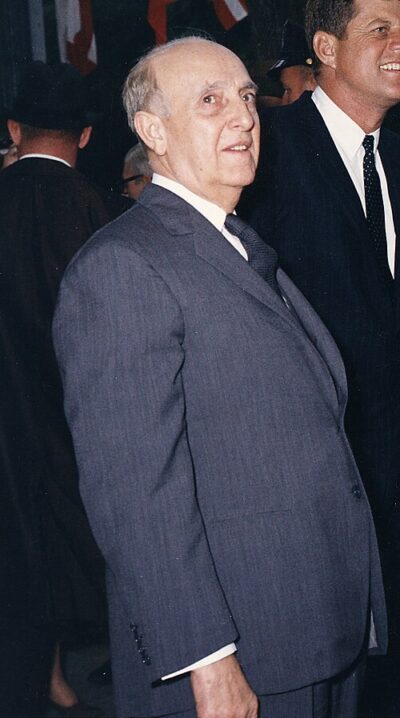
Peruvian Democratic Movement
The Peruvian Democratic Movement is a political party. It was founded in 1956 by Manuel Cisneros Sánchez. Its headquarters are in Lima. It stands for conservative liberalism.
- Country
- Peru
- Founded
- 1956
- Ideology
- conservative liberalism
All 7 facts, and where they come from
Facts
7 facts · 0 confirmed by two sources · 0 cited · 7 from one source
Where this comes from
Papalocal keeps its own record. It started from these sources; what each one said is kept here as it was copied, so a change on their side never changes this page by itself. Tap one to read its version.
What Wikidata says · copied November 17, 2026 · revision 2224154148
- Described as
- political party
- Other names
- Pradist Democratic Movement
- What it is
- political party
- Founded
- 1956
- Ended
- 1981
- Founded by
- Manuel Cisneros Sánchez · 1 reference
- Headquarters
- Lima
- Country
- Peru
- Ideology
- conservative liberalism
- Wikipedias with a page
- 3
Wikidata item Q5948160 (wikidata.org/wiki/Q5948160), public domain (CC0). Copied 2026-11-17.
What Wikipedia says · copied November 17, 2026 · revision 1370283339
Peruvian Democratic Movement (Spanish: Movimiento Democrático Peruano, MDP), originally named Pradist Democratic Movement (Spanish: Movimiento Democrático Pradista, MDP), was a political party in Peru in 1956. The founder of the party was Manuel Cisneros Sánchez. Manuel Prado y Ugarteche was the leader of the party, and was elected president in 1956. Later, MDP took the name Movimiento Democrático Peruano. It governed Peru between 1956 and 1962. In the 1962 election, the party supported the candidacy of American Popular Revolutionary Alliance candidate Víctor Raúl Haya de la Torre.
From the Wikipedia article “Peruvian Democratic Movement” (en.wikipedia.org/wiki/Peruvian_Democratic_Movement), by its contributors, under CC BY-SA 4.0 (creativecommons.org/licenses/by-sa/4.0/). Copied 2026-11-17; not changed.
Confirmed Two sources agree. Cited One source, and it names where it got it. One source One source, without a reference of its own. Sources disagree The sources disagree. We show the best-supported value and keep theirs below.