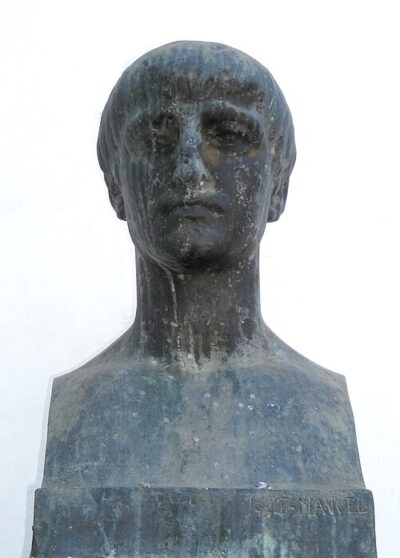
Pharsalia
Pharsalia is an epic poem by Marcus Annaeus Lucanus. It came out in 65.
- Came out
- 65
- Written by
- Lucan
- Genre
- epic poem
All 5 facts, and where they come from
Facts
5 facts · 0 confirmed by two sources · 3 cited · 2 from one source
Where this comes from
Papalocal keeps its own record. It started from these sources; what each one said is kept here as it was copied, so a change on their side never changes this page by itself. Tap one to read its version.
What Wikidata says · copied November 17, 2026 · revision 2526831166
- Described as
- epic poem by Marcus Annaeus Lucanus
- Other names
- Bellum Civile, Luc., On the Civil War
- What it is
- literary work · 1 reference
- Written by
- Lucan · 1 reference
- Genre
- epic poem
- Language
- Latin · 1 reference
- Came out
- 65
- Wikipedias with a page
- 21
Wikidata item Q678375 (wikidata.org/wiki/Q678375), public domain (CC0). Copied 2026-11-17.
What Wikipedia says · copied November 17, 2026 · revision 1384740848
De Bello Civili (Latin pronunciation: [deː ˈbɛlloː kiːˈwiːliː]; On the Civil War), more commonly referred to as the Pharsalia (Latin: [pʰarˈsaːlia], feminine singular), is a Roman epic poem written by the poet Lucan, detailing the civil war between Julius Caesar and the forces of the Roman Senate led by Pompey the Great. The poem's title is a reference to the Battle of Pharsalus, which occurred in 48 BC near Pharsalus, Thessaly, in Northern Greece. Caesar decisively defeated Pompey in this battle, which occupies all of the epic's seventh book. In the early twentieth century, translator J. D. Duff, while arguing that "no reasonable judgment can rank Lucan among the world's great epic poets", notes that the work is notable for Lucan's decision to eschew divine intervention and downplay supernatural occurrences in the events of the story. Scholarly estimation of Lucan's poem and poetry has since changed, as explained by commentator Philip Hardie in 2013: "In recent decades, it has undergone a thorough critical re-evaluation, to re-emerge as a major expression of Neronian politics and aesthetics, a poem whose studied artifice enacts a complex relationship between poetic fantasy and historical reality."
From the Wikipedia article “Pharsalia” (en.wikipedia.org/wiki/Pharsalia), by its contributors, under CC BY-SA 4.0 (creativecommons.org/licenses/by-sa/4.0/). Copied 2026-11-17; not changed.
Confirmed Two sources agree. Cited One source, and it names where it got it. One source One source, without a reference of its own. Sources disagree The sources disagree. We show the best-supported value and keep theirs below.
Picture: Wikimedia Commons: Pharsalia.tif · See Commons file page