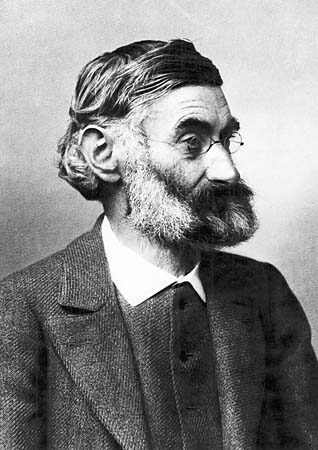
Physics Association (Frankfurt am Main, Germany)
Physics Association (Frankfurt am Main, Germany) is a German society for science founded in 1824. It was founded by Johann Valentin Albert, Christian Ernst Neeff and Detmar Wilhelm Soemmerring. It has 4 employees (2023).
- Founded
- October 24, 1824
- Founded by
- Johann Valentin Albert
- Headquarters
- Frankfurt
- Employees
- 4 (2023)
- Country
- Germany
All 14 facts, and where they come from
Facts
14 facts · 0 confirmed by two sources · 1 cited · 13 from one source
Where this comes from
Papalocal keeps its own record. It started from these sources; what each one said is kept here as it was copied, so a change on their side never changes this page by itself. Tap one to read its version.
What Wikidata says · copied November 17, 2026 · revision 2517283923
- Described as
- German society for science founded in 1824
- Other names
- Physics Association – Society for Education and Science
- What it is
- academy of sciences; scientific society
- Founded
- October 24, 1824
- Founded by
- Johann Valentin Albert; Christian Ernst Neeff; Detmar Wilhelm Soemmerring; Johann Jacob Casimir Buch
- Headquarters
- Frankfurt
- Located in
- Frankfurt
- Country
- Germany · 1 reference
- Chair
- Christian Ernst Neeff (2 times) (1839–1844) · 1 reference; Peter Joseph Aloys Eder (1840–1841) · 1 reference
- Employees
- 1 (1833)
- Official website
- http://www.physikalischer-verein.de/
- Wikipedias with a page
- 4
Wikidata item Q2089433 (wikidata.org/wiki/Q2089433), public domain (CC0). Copied 2026-11-17.
What Wikipedia says · copied November 17, 2026 · revision 1377962733
The Frankfurt Physical Society (German: Physikalischer Verein) is a learned society based in Frankfurt, Germany. The society was founded in 1824 by physicians, educators and businessmen with the aim of promoting the study of physics and chemistry among its members. The society provided access to scientific instruments and chemicals for private experimentation and hosted lectures on recent discoveries, whether made by its own members or reported from elsewhere. In the following years, volunteer committees were formed within the society to collect meteorological data, research ways to ensure the synchronisation of the city's clocks, and to establish a library.
Starting in the 1830s, the city of Frankfurt supported the society financially to employ a full-time lecturer, who in turn was required to teach students at the local Gymnasien. With a growing staff of full-time lecturers and voluntary committees, the society functioned as a kind of university for Frankfurt during the Gründerzeit period in the mid- to late 19th century. Students could attend weekly lectures, often focused on introducing fundamental concepts in chemistry and physics as well as participate in week-long practical training sessions in the society's laboratories. Toward the end of the 19th century, the society expanded rapidly, supported by Frankfurt's growing industry. In 1906, a new headquarters, now known as the Arthur-von-Weinberg-Building, was inaugurated, featuring the society's first purpose-built astronomical observatory.
As Frankfurt had no university at the time, the society played a foundational role when efforts led by Franz Adickes to establish one began to take shape. It contributed research institutes, along with staff and facilities, including its headquarters, to the founding of what would become Goethe University Frankfurt in 1914. Following the hyperinflation in the Weimar Republic, the society was no longer able to finance its personnel, and the university fully took over the institutes and their staff. The society subsequently shifted its focus to public outreach, especially in the fields of astronomy and physics, repurposing its observatory for public use.
The Society's main building was destroyed during the Bombing of Frankfurt am Main in World War II, and the observatory was not reopened until 1960. The building continued to be used by the university until 2005. Today, it is owned by the Senckenberg Nature Research Society, but the society still maintains its headquarters and a public observatory on the premises.
Frankfurt Physical Society now primarily focuses on public engagement in physics and astronomy. It organizes lectures, outreach events, and public observing nights. The society operates three observatories: the public observatory in Frankfurt, the Hans-Ludwig-Neumann-Observatory at the Kleiner Feldberg, and a remote observatory in Spain used by members and students for spectroscopic research.
From the Wikipedia article “Frankfurt Physical Society” (en.wikipedia.org/wiki/Frankfurt_Physical_Society), by its contributors, under CC BY-SA 4.0 (creativecommons.org/licenses/by-sa/4.0/). Copied 2026-11-17; not changed.
Confirmed Two sources agree. Cited One source, and it names where it got it. One source One source, without a reference of its own. Sources disagree The sources disagree. We show the best-supported value and keep theirs below.
Picture: Wikimedia Commons: Franz von Hoven, Physikalischer Verein (Mittelrisalit) um 1908.tif · See Commons file page