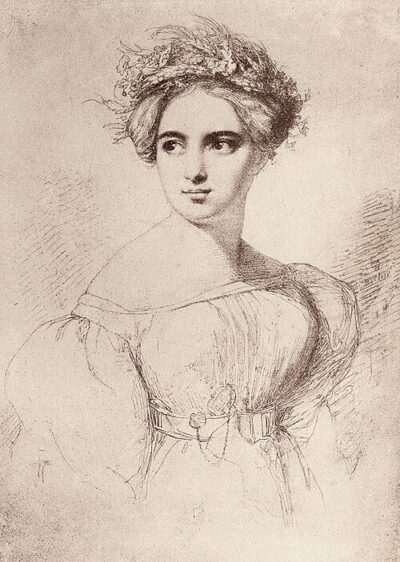
Piano Trio
Piano Trio is a composition for violin, cello, and piano by Fanny Mendelssohn. It came out in 1850.
- Released
- 1850
- Came out
- 1847
All 4 facts, and where they come from
Facts
4 facts · 0 confirmed by two sources · 4 cited · 0 from one source
Where this comes from
Papalocal keeps its own record. It started from these sources; what each one said is kept here as it was copied, so a change on their side never changes this page by itself. Tap one to read its version.
What Wikidata says · copied November 17, 2026 · revision 2550003934
- Described as
- composition for violin, cello, and piano by Fanny Mendelssohn
- Other names
- Piano Trio, Op. 11
- What it is
- musical work/composition · 1 reference
- Music by
- Fanny Mendelssohn · 1 reference
- Released
- 1850 · 1 reference
- Came out
- 1847 · 1 reference
- Wikipedias with a page
- 4
Wikidata item Q48969126 (wikidata.org/wiki/Q48969126), public domain (CC0). Copied 2026-11-17.
What Wikipedia says · copied November 17, 2026 · revision 1345582899
The Piano Trio for violin, cello, piano in D minor, Op. 11, by Fanny Hensel was conceived between 1846 and 1847 as a birthday present for her sister Rebecka, and posthumously published in 1850, three years after the composer's death.
The trio is in four movements:In 1847, an anonymous critic in the Neue Berliner Musikzeitung found in the trio “...broad, sweeping foundations that build themselves up through stormy waves into a marvelous edifice. In this respect the first movement is a masterpiece, and the trio most highly original.” Angela Mace Christian refers to the piece in Grove Music Online as "one of her most impressive chamber works."
From the Wikipedia article “Piano Trio (Hensel)” (en.wikipedia.org/wiki/Piano_Trio_(Hensel)), by its contributors, under CC BY-SA 4.0 (creativecommons.org/licenses/by-sa/4.0/). Copied 2026-11-17; not changed.
Confirmed Two sources agree. Cited One source, and it names where it got it. One source One source, without a reference of its own. Sources disagree The sources disagree. We show the best-supported value and keep theirs below.