Pick's theorem
Pick's theorem is a formula that the area of a planar polygon whose vertices all have integer coordinates equals the number of interior integer points plus half the number of boundary integer points minus one.
All 2 facts, and where they come from
Facts
2 facts · 0 confirmed by two sources · 0 cited · 2 from one source
Where this comes from
Papalocal keeps its own record. It started from these sources; what each one said is kept here as it was copied, so a change on their side never changes this page by itself. Tap one to read its version.
What Wikidata says · copied November 18, 2026 · revision 2535513294
- Described as
- formula that the area of a planar polygon whose vertices all have integer coordinates equals the number of interior integer points plus half the number of boundary integer points minus one
- What it is
- theorem
- Named after
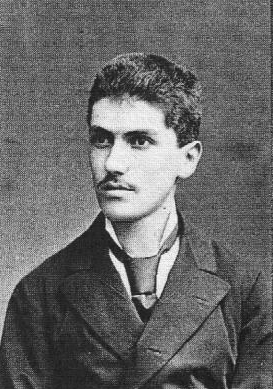
- Georg Alexander Pick
- Wikipedias with a page
- 29
Wikidata item Q646523 (wikidata.org/wiki/Q646523), public domain (CC0). Copied 2026-11-18.
What Wikipedia says · copied November 18, 2026 · revision 1386108925
In geometry, Pick's theorem provides a formula for the area of a simple polygon with integer vertex coordinates, in terms of the number of integer points within it and on its boundary. The result was first described by Georg Alexander Pick in 1899. It was popularized in English by Hugo Steinhaus in the 1950 edition of his book Mathematical Snapshots. It has multiple proofs, and can be generalized to formulas for certain kinds of non-simple polygons.
From the Wikipedia article “Pick's theorem” (en.wikipedia.org/wiki/Pick's_theorem), by its contributors, under CC BY-SA 4.0 (creativecommons.org/licenses/by-sa/4.0/). Copied 2026-11-18; not changed.
Confirmed Two sources agree. Cited One source, and it names where it got it. One source One source, without a reference of its own. Sources disagree The sources disagree. We show the best-supported value and keep theirs below.
Picture: Wikimedia Commons: Pick theorem simple.svg · See Commons file page