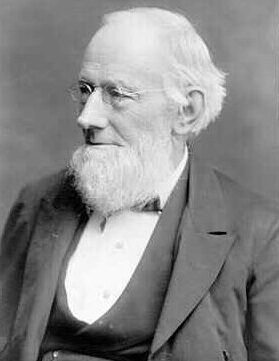
Pitman shorthand
Pitman shorthand is a system of shorthand for English, developed by Isaac Pitman. It came out in 1837.
- Came out
- 1837
All 1 facts, and where they come from
Facts
1 facts · 0 confirmed by two sources · 1 cited · 0 from one source
Where this comes from
Papalocal keeps its own record. It started from these sources; what each one said is kept here as it was copied, so a change on their side never changes this page by itself. Tap one to read its version.
What Wikidata says · copied November 18, 2026 · revision 2406828137
- Described as
- system of shorthand for English, developed by Isaac Pitman
- Came out
- 1837 · 1 reference
- Wikipedias with a page
- 10
Wikidata item Q3534236 (wikidata.org/wiki/Q3534236), public domain (CC0). Copied 2026-11-18.
What Wikipedia says · copied November 18, 2026 · revision 1380960014
Pitman shorthand is a system of shorthand for the English language developed by Isaac Pitman (1813–1897), who first presented it in 1837. Like most systems of shorthand, it is a phonetic transcription system; the symbols do not represent letters, but rather sounds, and words are, for the most part, written as they are spoken.
Shorthand was referred to as phonography in the 19th century. It was first used by newspapers who sent phonographers to cover important speeches, usually stating (as a claim of accuracy) that they had done so. The practice got national attention in the United States in 1858 during the Lincoln–Douglas Debates which were recorded phonographically. The shorthand was converted into words during the trip back to Chicago, where typesetters and telegraphers awaited them.
At its peak popularity in the late 1800s, Pitman shorthand was the most popular shorthand system used in the United Kingdom and the second most popular in the United States.
One characteristic feature of Pitman shorthand is that unvoiced and voiced pairs of sounds (such as /p/ and /b/ or /t/ and /d/) are represented by strokes which differ only in thickness; the thin stroke representing "light" sounds such as /p/ and /t/; the thick stroke representing "heavy" sounds such as /b/ and /d/. Doing this requires a writing instrument responsive to the user's drawing pressure: specialist fountain pens (with fine, flexible nibs) were originally used, but pencils are now more commonly used.
Pitman shorthand uses straight strokes and quarter-circle strokes, in various orientations, to represent consonant sounds. The predominant way of indicating vowels is to use light or heavy dots, dashes, or other special marks drawn close to the consonant. Vowels are drawn before the stroke (or over a horizontal stroke) if the vowel is pronounced before the consonant, and after the stroke (or under a horizontal stroke) if pronounced after the consonant. Each vowel, whether indicated by a dot for a short vowel or by a dash for a longer, more drawn-out vowel, has its own position relative to its adjacent stroke (beginning, middle, or end) to indicate different vowel sounds in an unambiguous system. However, to increase writing speed, rules of "vowel indication" exist whereby the consonant stroke is raised, kept on the line, or lowered to match whether the first vowel of the word is written at the beginning, middle, or end of a consonant stroke—without actually writing the vowel. This is often enough to distinguish words with similar consonant patterns. Another method of vowel indication is to choose from among a selection of different strokes for the same consonant. For example, the sound "R" has two kinds of strokes: round, or straight-line, depending on whether there is a vowel sound before or after the R.
There have been several versions of Pitman's shorthand since 1837. The original Pitman's shorthand had an "alphabet" of consonants, which was later modified. Additional modifications and rules were added to successive versions. Pitman New Era (1922–1975) had the most developed set of rules and abbreviation lists. Pitman 2000 (1975–present) introduced some simplifications and drastically reduced the list of abbreviations to reduce the memory load, officially reduced to a list of 144 short forms. The later versions dropped certain symbols and introduced other simplifications to earlier versions. For example, strokes "rer" (heavy curved downstroke) and "kway" (hooked horizontal straight stroke) are present in Pitman's New Era, but not in Pitman's 2000.
From the Wikipedia article “Pitman shorthand” (en.wikipedia.org/wiki/Pitman_shorthand), by its contributors, under CC BY-SA 4.0 (creativecommons.org/licenses/by-sa/4.0/). Copied 2026-11-18; not changed.
Confirmed Two sources agree. Cited One source, and it names where it got it. One source One source, without a reference of its own. Sources disagree The sources disagree. We show the best-supported value and keep theirs below.
Picture: Wikimedia Commons: Pitman.png · See Commons file page