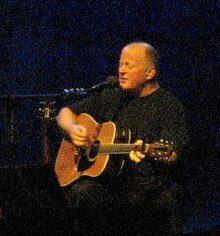
Planxty
Planxty is an Irish musical group. It was founded in 1972.
- Founded
- 1972
- Genre
- music of Ireland
- Record label
- Polydor Records
- Country of origin
- Ireland
All 7 facts, and where they come from
Facts
7 facts · 0 confirmed by two sources · 0 cited · 7 from one source
Where this comes from
Papalocal keeps its own record. It started from these sources; what each one said is kept here as it was copied, so a change on their side never changes this page by itself. Tap one to read its version.
What Wikidata says · copied November 18, 2026 · revision 2523789245
- Described as
- Irish musical group
- What it is
- musical group
- Genre
- music of Ireland; Celtic rock · 1 reference; Irish folk music · 1 reference
- Country of origin
- Ireland
- Record label
- Polydor Records · 1 reference
- Founded
- 1972
- Wikipedias with a page
- 16
Wikidata item Q763092 (wikidata.org/wiki/Q763092), public domain (CC0). Copied 2026-11-18.
What Wikipedia says · copied November 18, 2026 · revision 1386359978
Planxty were an Irish folk music band formed in January 1972, consisting initially of Christy Moore (vocals, acoustic guitar, bodhrán), Andy Irvine (vocals, mandolin, mandola, bouzouki, hurdy-gurdy, harmonica), Dónal Lunny (bouzouki, guitars, bodhrán, keyboards), and Liam O'Flynn (uilleann pipes, tin whistle). They transformed and popularized Irish folk music, touring and recording to great acclaim.
Subsequently, Johnny Moynihan, Paul Brady, Matt Molloy (flute), Bill Whelan (keyboards), Nollaig Casey (fiddle) and briefly, Noel Hill (concertina) and Tony Linnane (fiddle) were also temporary members.
Planxty broke up twice, first in December 1975 and again in April 1983. The original quartet reunited in October 2003 and their final performance was on 31 January 2005.
From the Wikipedia article “Planxty” (en.wikipedia.org/wiki/Planxty), by its contributors, under CC BY-SA 4.0 (creativecommons.org/licenses/by-sa/4.0/). Copied 2026-11-18; not changed.
Confirmed Two sources agree. Cited One source, and it names where it got it. One source One source, without a reference of its own. Sources disagree The sources disagree. We show the best-supported value and keep theirs below.