Poisson bracket
Poisson bracket is a bilinear differential operation on scalar fields on a symplectic (or, more generally, Poisson) manifold.
All 1 facts, and where they come from
Facts
1 facts · 0 confirmed by two sources · 0 cited · 1 from one source
Where this comes from
Papalocal keeps its own record. It started from these sources; what each one said is kept here as it was copied, so a change on their side never changes this page by itself. Tap one to read its version.
What Wikidata says · copied November 17, 2026 · revision 2561449439
- Described as
- bilinear differential operation on scalar fields on a symplectic (or, more generally, Poisson) manifold
- What it is
- mathematical concept
- Wikipedias with a page
- 22
Wikidata item Q1052775 (wikidata.org/wiki/Q1052775), public domain (CC0). Copied 2026-11-17.
What Wikipedia says · copied November 17, 2026 · revision 1380112447
In mathematics and classical mechanics, the Poisson bracket is an important binary operation in Hamiltonian mechanics, playing a central role in Hamilton's equations of motion, which govern the time evolution of a Hamiltonian dynamical system. The Poisson bracket also distinguishes a certain class of coordinate transformations, called canonical transformations, which map canonical coordinate systems into other canonical coordinate systems. A "canonical coordinate system" consists of canonical position and momentum variables (below symbolized by qi and pi, respectively) that satisfy canonical Poisson bracket relations. The set of possible canonical transformations is always very rich. For instance, it is often possible to choose the Hamiltonian itself ℋ=ℋ(q,p,t) as one of the new canonical momentum coordinates.
In a more general sense, the Poisson bracket is used to define a Poisson algebra, of which the algebra of functions on a Poisson manifold is a special case. There are other general examples, as well: it occurs in the theory of Lie algebras, where the tensor algebra of a Lie algebra forms a Poisson algebra; a detailed construction of how this comes about is given in the universal enveloping algebra article. Quantum deformations of the universal enveloping algebra lead to the notion of quantum groups.
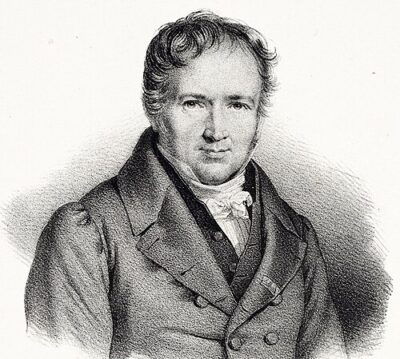
All of these objects are named in honor of French mathematician Siméon Denis Poisson. He introduced the Poisson bracket in his 1809 treatise on mechanics.
From the Wikipedia article “Poisson bracket” (en.wikipedia.org/wiki/Poisson_bracket), by its contributors, under CC BY-SA 4.0 (creativecommons.org/licenses/by-sa/4.0/). Copied 2026-11-17; not changed.
Confirmed Two sources agree. Cited One source, and it names where it got it. One source One source, without a reference of its own. Sources disagree The sources disagree. We show the best-supported value and keep theirs below.