Poisson process
Poisson process is a random mathematical object that consists of points randomly located on a mathematical space.
All 2 facts, and where they come from
Facts
2 facts · 0 confirmed by two sources · 0 cited · 2 from one source
Where this comes from
Papalocal keeps its own record. It started from these sources; what each one said is kept here as it was copied, so a change on their side never changes this page by itself. Tap one to read its version.
What Wikidata says · copied November 17, 2026 · revision 2541697048
- Described as
- random mathematical object that consists of points randomly located on a mathematical space
- Other names
- Poisson point process, Poisson random measure, Poisson point field, Poisson random point field
- What it is
- mathematical concept
- Named after
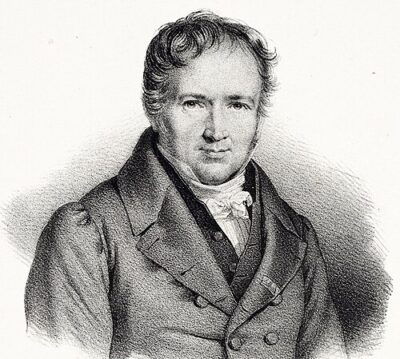
- Siméon Denis Poisson
- Wikipedias with a page
- 21
Wikidata item Q1145117 (wikidata.org/wiki/Q1145117), public domain (CC0). Copied 2026-11-17.
What Wikipedia says · copied November 17, 2026 · revision 1383618227
In probability theory, statistics and related fields, a Poisson point process (also known as: Poisson random measure, Poisson random point field and Poisson point field) is a type of mathematical object that consists of points randomly located on a mathematical space with the essential feature that the points occur independently of one another. The process's name derives from the fact that the number of points in any given finite region follows a Poisson distribution. The process and the distribution are named after French mathematician Siméon Denis Poisson. The process itself was discovered independently and repeatedly in several settings, including experiments on radioactive decay, telephone call arrivals and actuarial science.
This point process is used as a mathematical model for seemingly random processes in numerous disciplines including astronomy, biology, ecology, geology, seismology, physics, economics, image processing, and telecommunications.
The Poisson point process is often defined on the real number line, where it can be viewed as a stochastic process. It is used, for example, in queueing theory to model random events distributed in time, such as the arrival of customers at a store, phone calls at a telephone exchange, or the occurrence of earthquakes. In the plane, the point process—also known as a spatial Poisson process—can represent the locations of scattered objects such as transmitters in a wireless network, particles colliding into a particle detector, or trees in a forest. The process is widely used in mathematical models and in related fields, including spatial point processes, stochastic geometry, spatial statistics and continuum percolation theory.
The point process depends on a single mathematical object, which, depending on the context, may be a constant, a locally integrable function or, in more general settings, a Radon measure. In the first case, the constant, known as the rate or intensity, is the average density of the points in the Poisson process located in some region of space. The resulting point process is called a homogeneous or stationary Poisson point process. In the second case, the point process is called an inhomogeneous or nonhomogeneous Poisson point process, and the average density of points depend on the location of the underlying space of the Poisson point process. The word point is often omitted, but there are other Poisson processes of objects, which, instead of points, consist of more complicated mathematical objects such as lines and polygons, and such processes can be based on the Poisson point process. Both the homogeneous and nonhomogeneous Poisson point processes are particular cases of the generalized renewal process.
From the Wikipedia article “Poisson point process” (en.wikipedia.org/wiki/Poisson_point_process), by its contributors, under CC BY-SA 4.0 (creativecommons.org/licenses/by-sa/4.0/). Copied 2026-11-17; not changed.
Confirmed Two sources agree. Cited One source, and it names where it got it. One source One source, without a reference of its own. Sources disagree The sources disagree. We show the best-supported value and keep theirs below.
Picture: Wikimedia Commons: Poisson process.svg · See Commons file page