Poisson's equation
Poisson's equation is a partial differential equation of elliptic type with broad utility in mechanical engineering and theoretical physics.
All 1 facts, and where they come from
Facts
1 facts · 0 confirmed by two sources · 0 cited · 1 from one source
Where this comes from
Papalocal keeps its own record. It started from these sources; what each one said is kept here as it was copied, so a change on their side never changes this page by itself. Tap one to read its version.
What Wikidata says · copied November 17, 2026 · revision 2541695462
- Described as
- partial differential equation of elliptic type with broad utility in mechanical engineering and theoretical physics
- Other names
- Poisson equation, Poisson differential equation, Poisson partial differential equation
- Named after
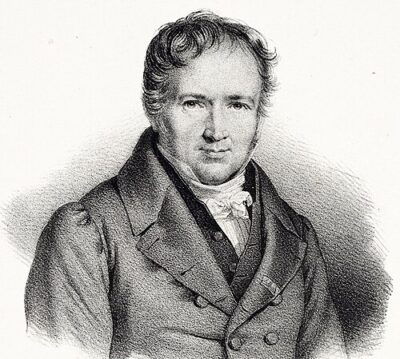
- Siméon Denis Poisson
- Wikipedias with a page
- 35
Wikidata item Q827688 (wikidata.org/wiki/Q827688), public domain (CC0). Copied 2026-11-17.
What Wikipedia says · copied November 17, 2026 · revision 1383755406
Poisson's equation is an elliptic partial differential equation of broad utility in theoretical physics. For example, the solution to Poisson's equation is the potential field caused by a given electric charge or mass density distribution; with the potential field known, one can then calculate the corresponding electrostatic or gravitational (force) field. It is a generalization of Laplace's equation, which is also frequently seen in physics. The equation is named after French mathematician and physicist Siméon Denis Poisson who published it in 1823.
From the Wikipedia article “Poisson's equation” (en.wikipedia.org/wiki/Poisson's_equation), by its contributors, under CC BY-SA 4.0 (creativecommons.org/licenses/by-sa/4.0/). Copied 2026-11-17; not changed.
Confirmed Two sources agree. Cited One source, and it names where it got it. One source One source, without a reference of its own. Sources disagree The sources disagree. We show the best-supported value and keep theirs below.