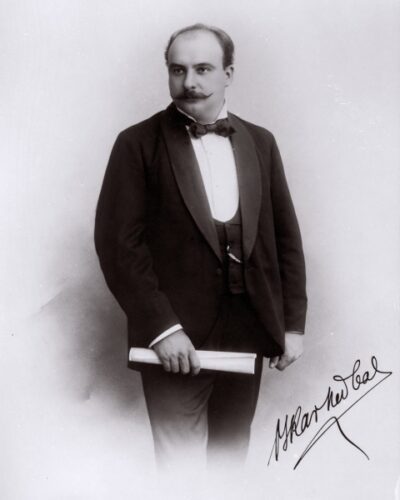
Polish Blood
Polish Blood is an Operetta by Oskar Nedbal. It came out in 1910. It is based on The Squire's Daughter.
- Came out
- 1910
- Country of origin
- Austria
All 6 facts, and where they come from
Facts
6 facts · 0 confirmed by two sources · 0 cited · 6 from one source
Where this comes from
Papalocal keeps its own record. It started from these sources; what each one said is kept here as it was copied, so a change on their side never changes this page by itself. Tap one to read its version.
What Wikidata says · copied November 18, 2026 · revision 2515461572
- Described as
- Operetta by Oskar Nedbal
- What it is
- dramatico-musical work
- Music by
- Oskar Nedbal
- Language
- German
- Country of origin
- Austria
- Based on
- The Squire's Daughter · 1 reference
- Came out
- 1910
- Wikipedias with a page
- 9
Wikidata item Q1519489 (wikidata.org/wiki/Q1519489), public domain (CC0). Copied 2026-11-18.
What Wikipedia says · copied November 18, 2026 · revision 1363299273
Polenblut (English: Polish Blood) is a German-language operetta in three scenes by Czech composer Oskar Nedbal with a libretto by Austrian playwright Leo Stein. It is allegedly loosely based on the short story "Mistress into Maid" (also known as "The Squire's Daughter") from The Belkin Tales by Russian author Alexander Pushkin; although Stein himself did not say this. It was one of the most popular operettas in Eastern Europe during World War I, but anti-German sentiment prevented the opera from finding a place on stages elsewhere other than in the United States where it was performed in a heavily modified adaptation under the name The Peasant Girl.
From the Wikipedia article “Polenblut” (en.wikipedia.org/wiki/Polenblut), by its contributors, under CC BY-SA 4.0 (creativecommons.org/licenses/by-sa/4.0/). Copied 2026-11-18; not changed.
Confirmed Two sources agree. Cited One source, and it names where it got it. One source One source, without a reference of its own. Sources disagree The sources disagree. We show the best-supported value and keep theirs below.
Picture: Wikimedia Commons: PolskaKrevVinohrady1914.jpg · See Commons file page