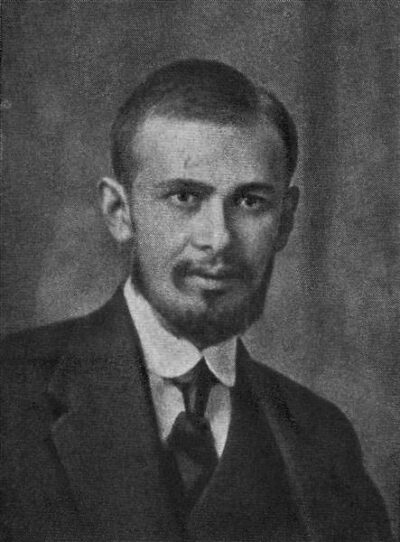
Polivanov system
Polivanov system is a system of transcription of the Japanese language into Russian Cyrillic script. It came out in 1917. It was created by Yevgeny Polivanov.
- Released
- 1917
- Created by
- Yevgeny Polivanov
All 5 facts, and where they come from
Facts
5 facts · 0 confirmed by two sources · 0 cited · 5 from one source
Where this comes from
Papalocal keeps its own record. It started from these sources; what each one said is kept here as it was copied, so a change on their side never changes this page by itself. Tap one to read its version.
What Wikidata says · copied November 18, 2026 · revision 2564484572
- Described as
- system of transcription of the Japanese language into Russian Cyrillic script
- Other names
- cyrillization of Japanese, cyrillisation of Japanese, Polivanov transcription system
- What it is
- orthographic transcription; cyrillization system
- Created by
- Yevgeny Polivanov
- Released
- 1917
- Named after
- Yevgeny Polivanov
- Wikipedias with a page
- 14
Wikidata item Q2622924 (wikidata.org/wiki/Q2622924), public domain (CC0). Copied 2026-11-18.
What Wikipedia says · copied November 18, 2026 · revision 1385109299
Polivanov system is a system of transliterating the Japanese language into Russian Cyrillic script, either to represent Japanese proper names or terms in Russian, or as an aid to Japanese language learning in Russian and potentially other languages utilizing the Cyrillic script. The system was developed by Yevgeny Polivanov in 1917.
In terms of spelling the system is a middle ground between Kunrei-shiki and Hepburn romanisations, matching the former everywhere except for morae hu and tu, which are spelled as in Hepburn (fu and tsu), moras starting with z (which are spelled with dz, as in archaic Hepburn, but following the consistency of Kunrei-shiki with Jun being spelled as Dzyun) and syllabic n, which is changed to m before b, p and m as in traditional Hepburn.
The following cyrillization system for Japanese is known as the Yevgeny Polivanov system. Note that it has its own spelling conventions and does not necessarily constitute a direct phonetic transcription of the pronunciation into the standard Russian usage of the Cyrillic alphabet.
From the Wikipedia article “Polivanov system” (en.wikipedia.org/wiki/Polivanov_system), by its contributors, under CC BY-SA 4.0 (creativecommons.org/licenses/by-sa/4.0/). Copied 2026-11-18; not changed.
Confirmed Two sources agree. Cited One source, and it names where it got it. One source One source, without a reference of its own. Sources disagree The sources disagree. We show the best-supported value and keep theirs below.