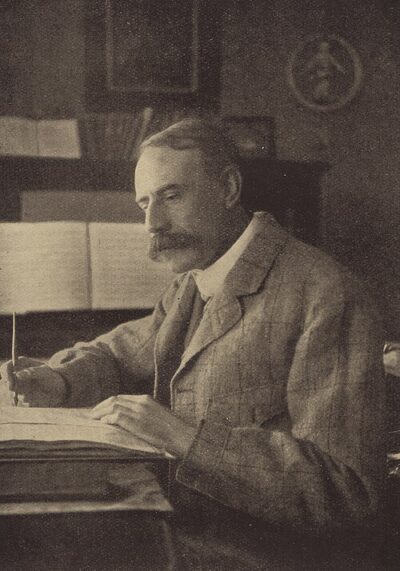
Pomp and Circumstance Marches
Pomp and Circumstance Marches is a series of marches for orchestra composed by Sir Edward Elgar. It came out in 1904.
- Released
- 1904
- Genre
- march
All 4 facts, and where they come from
Facts
4 facts · 0 confirmed by two sources · 0 cited · 4 from one source
Where this comes from
Papalocal keeps its own record. It started from these sources; what each one said is kept here as it was copied, so a change on their side never changes this page by itself. Tap one to read its version.
What Wikidata says · copied November 17, 2026 · revision 2540700520
- Described as
- series of marches for orchestra composed by Sir Edward Elgar
- Other names
- Pomp and Circumstance
- What it is
- group of musical works
- Music by
- Edward Elgar
- Genre
- march
- Released
- 1904
- Wikipedias with a page
- 21
Wikidata item Q1141118 (wikidata.org/wiki/Q1141118), public domain (CC0). Copied 2026-11-17.
What Wikipedia says · copied November 17, 2026 · revision 1377725064
The Pomp and Circumstance Marches are a series of five marches for orchestra composed by Edward Elgar between 1901 and 1930, together with a sixth march created in 2006 by Anthony Payne from Elgar's sketches. The five original marches were dedicated to the composer's friends the conductor Alfred E. Rodewald, the composer Granville Bantock and the organists Ivor Atkins, G. R. Sinclair and Percy Hull.
In England, the first, and best-known, of the marches is an established feature at the Last Night of the Proms every year, and in the US and elsewhere its slow middle section is traditionally played as the processional tune at most high school and college graduation ceremonies.
From the Wikipedia article “Pomp and Circumstance Marches” (en.wikipedia.org/wiki/Pomp_and_Circumstance_Marches), by its contributors, under CC BY-SA 4.0 (creativecommons.org/licenses/by-sa/4.0/). Copied 2026-11-17; not changed.
Confirmed Two sources agree. Cited One source, and it names where it got it. One source One source, without a reference of its own. Sources disagree The sources disagree. We show the best-supported value and keep theirs below.