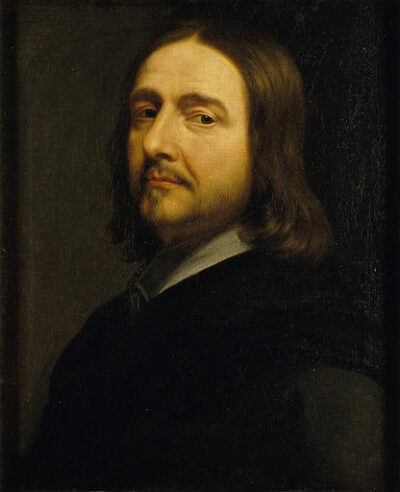
Portrait of Cardinal Richelieu
Portrait of Cardinal Richelieu is a painting by Philippe de Champaigne in the Louvre.
- Came out
- 17th century
- Created by
- Philippe de Champaigne
- Genre
- portrait
- Country of origin
- France
All 7 facts, and where they come from
Facts
7 facts · 0 confirmed by two sources · 3 cited · 4 from one source
Where this comes from
Papalocal keeps its own record. It started from these sources; what each one said is kept here as it was copied, so a change on their side never changes this page by itself. Tap one to read its version.
What Wikidata says · copied November 17, 2026 · revision 2485299748
- Described as
- painting by Philippe de Champaigne in the Louvre
- What it is
- painting · 1 reference
- Created by
- Philippe de Champaigne · 1 reference
- Genre
- portrait
- Country of origin
- France
- Came out
- 17th century · 2 references
- Owned by
- Louis Jean Marie de Bourbon, Duke of Penthièvre (–1793) · 1 reference; French State (1794–) · 1 reference
- Wikipedias with a page
- 4
Wikidata item Q15707397 (wikidata.org/wiki/Q15707397), public domain (CC0). Copied 2026-11-17.
What Wikipedia says · copied November 17, 2026 · revision 1376234301
Portrait of Cardinal Richelieu is an oil on canvas painting by Philippe de Champaigne, from c. 1635-1640. It is one of the 21 portraits he produced of cardinal de Richelieu. Probably originally meant for the hôtel de Toulouse, it passed through the collections of Louis II Phélypeaux de La Vrillière then Louis Jean Marie de Bourbon, Duke of Penthièvre (1725-1793) and was seized with the rest of the latter's collection at the château d'Anet by the republican French state in 1793, before being placed in the Louvre five years later, where it still hangs.
From the Wikipedia article “Portrait of Cardinal Richelieu (Champaigne, Paris)” (en.wikipedia.org/wiki/Portrait_of_Cardinal_Richelieu_(Champaigne,_Paris)), by its contributors, under CC BY-SA 4.0 (creativecommons.org/licenses/by-sa/4.0/). Copied 2026-11-17; not changed.
Confirmed Two sources agree. Cited One source, and it names where it got it. One source One source, without a reference of its own. Sources disagree The sources disagree. We show the best-supported value and keep theirs below.
Picture: Wikimedia Commons: Philippe de Champaigne - Portrait de Cardinal Richelieu (Louvre).jpg · See Commons file page