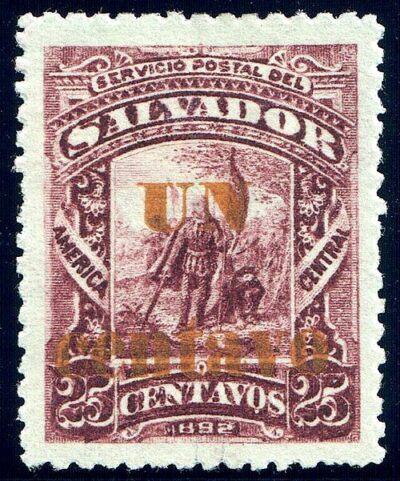
postage stamp
Postage stamp is a small piece of paper that is purchased and displayed on an item of mail as evidence of payment of postage.
All 1 facts, and where they come from
Facts
1 facts · 0 confirmed by two sources · 0 cited · 1 from one source
Where this comes from
Papalocal keeps its own record. It started from these sources; what each one said is kept here as it was copied, so a change on their side never changes this page by itself. Tap one to read its version.
What Wikidata says · copied November 17, 2026 · revision 2567499678
- Described as
- small piece of paper that is purchased and displayed on an item of mail as evidence of payment of postage
- Other names
- stamp, postal stamp
- What it is
- philatelic term
- Wikipedias with a page
- 111
Wikidata item Q37930 (wikidata.org/wiki/Q37930), public domain (CC0). Copied 2026-11-17.
What Wikipedia says · copied November 17, 2026 · revision 1381354959
A postage stamp is a small piece of paper issued by a post office, postal administration, or other authorized vendors to customers who pay postage (the cost involved in moving, insuring, or registering mail). Then the stamp is affixed to the face or address-side of any item of mail—an envelope or other postal cover (e.g., packet, box, mailing cylinder)—which they wish to send. The item is then processed by the postal system, where a postmark or cancellation mark—in modern usage indicating date and point of origin of mailing—is applied to the stamp and its left and right sides to prevent its reuse. Next the item is delivered to its address.
Always featuring the name of the issuing nation (with the exception of the United Kingdom), a denomination of its value, and often an illustration of persons, events, institutions, or natural realities that symbolize the nation's traditions and values, every stamp is printed on a piece of usually rectangular, but sometimes triangular or otherwise shaped special custom-made paper whose back is either glazed with an adhesive gum or self-adhesive.
Because governments issue stamps of different denominations in unequal numbers and routinely discontinue some lines and introduce others, and because of their illustrations and association with the social and political realities of the time of their issue, they are often prized for their beauty and historical significance by stamp collectors, whose study of their history and of mailing systems is called philately. Because collectors often buy stamps from an issuing agency with no intention to use them for postage, the revenues from such purchases and payments of postage can make them a source of net profit to that agency. On 1 May 1840, Sir Rowland Hill invented the Penny Black, the first adhesive postage stamp issued in the United Kingdom, selecting a simple design that showed Queen Victoria's profile. The artist Henry Corbould drew her image, basing his work on a medal by William Wyon. Perkins, Bacon & Petch, a leading security printing firm printed the stamp. Within three years postage stamps were introduced in Switzerland and Brazil, a little later in the United States, and by 1860, they were in 90 countries around the world. The first postage stamps did not need to show the issuing country, so no country name was included on them. Thus the United Kingdom remains the only country in the world to omit its name on postage stamps; the monarch's image signifies the United Kingdom as the country of origin.
From the Wikipedia article “Postage stamp” (en.wikipedia.org/wiki/Postage_stamp), by its contributors, under CC BY-SA 4.0 (creativecommons.org/licenses/by-sa/4.0/). Copied 2026-11-17; not changed.
Confirmed Two sources agree. Cited One source, and it names where it got it. One source One source, without a reference of its own. Sources disagree The sources disagree. We show the best-supported value and keep theirs below.
Picture: Salvadorian government, via Wikimedia Commons · Public domain