Premio Mylius
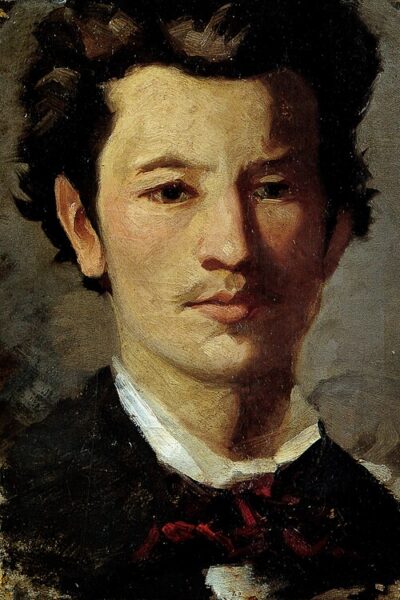
Premio Mylius is an Art prize. It was created in 1841 by Heinrich Mylius. It won The Scutching of hemp.
- Country
- Italy
- Created
- 1841
All 7 facts, and where they come from
Facts
7 facts · 0 confirmed by two sources · 0 cited · 7 from one source
Where this comes from
Papalocal keeps its own record. It started from these sources; what each one said is kept here as it was copied, so a change on their side never changes this page by itself. Tap one to read its version.
What Wikidata says · copied November 17, 2026 · revision 2437987920
- Described as
- Art prize
- Other names
- Premio Bernocchi Mylius, Premio Fondazione Mylius-Bernocchi
- What it is
- visual arts award
- Created
- 1841
- Founded by
- Heinrich Mylius
- Located in
- Milan
- Country
- Italy
- Awards
- The Scutching of hemp
- Named after
- Heinrich Mylius
- Wikipedias with a page
- 4
Wikidata item Q29045309 (wikidata.org/wiki/Q29045309), public domain (CC0). Copied 2026-11-17.
What Wikipedia says · copied November 17, 2026 · revision 1386220640
The Premio Mylius was an Italian prize for painting. It was established by the Austrian industrialist Heinrich Mylius in 1841 and awarded by the Accademia di Brera in Milan, which at that time was under Habsburg rule. In 1856 there were two types of award, an annual prize of 700 Austrian lire for a painting in oils, and a biennial award of 1000 lire for fresco work. It was awarded until the outbreak of the Second World War.
Among the recipients of the award were Salvatore Mazza (1856), Pietro Michis (1868), Vespasiano Bignami (1869), Giovanni Battista Ferrari (1870), Filippo Carcano (1878), Giovanni Beltrami, (1884) Amerino Cagnoni (1886), Francesco Filippini (1890), Egidio Riva (1902), Donato Frisia (1920) and Trento Longaretti (1939).
From the Wikipedia article “Mylius Prize” (en.wikipedia.org/wiki/Mylius_Prize), by its contributors, under CC BY-SA 4.0 (creativecommons.org/licenses/by-sa/4.0/). Copied 2026-11-17; not changed.
Confirmed Two sources agree. Cited One source, and it names where it got it. One source One source, without a reference of its own. Sources disagree The sources disagree. We show the best-supported value and keep theirs below.