
President of Croatia
President of Croatia is a position. It was created in 1990.
All 6 facts, and where they come from
Facts
6 facts · 0 confirmed by two sources · 0 cited · 6 from one source
Where this comes from
Papalocal keeps its own record. It started from these sources; what each one said is kept here as it was copied, so a change on their side never changes this page by itself. Tap one to read its version.
What Wikidata says · copied November 17, 2026 · revision 2558989995
- Described as
- position
- What it is
- position; Wikimedia information list
- Created
- December 22, 1990
- Country
- Croatia
- Office of
- Croatia
- Official website
- https://www.predsjednik.hr
- Wikipedias with a page
- 40
Wikidata item Q268984 (wikidata.org/wiki/Q268984), public domain (CC0). Copied 2026-11-17.
What Wikipedia says · copied November 17, 2026 · revision 1385617531
The president of Croatia, officially the president of the Republic of Croatia (Croatian: Predsjednik Republike Hrvatske), is the head of state of Croatia. The president serves as the commander-in-chief of the Croatian Armed Forces and functions as the chief representative of the nation. The office ranks first in the Croatian order of precedence, above the Croatian Prime Minister and Croatian Parliament Speaker. The president yields authority and responsibility to the Croatian Government – led by the prime minister – which is considered the most powerful seat in the Croatian political system. The prime minister directs domestic policy, economic policy, and fiscal policy, collaborating with the president on joint oversight of defence policy and foreign policy.
The president has the power to call ordinary and extraordinary elections for the Croatian Parliament, as well as to call referendums. The president formally appoints the prime minister, grants pardons and awards decorations. The president appoints the director of the Security and Intelligence Agency in agreement with the prime minister. The president may dissolve the parliament under constitutional circumstances. Although enjoying immunity, the president is impeachable for violation of the Constitution. The speaker of the Parliament is first in the presidential line of succession.
The president is elected on the basis of universal suffrage, through a secret ballot, for a five-year term. If no candidate in the elections secures more than 50% of all votes cast , a runoff election is held. The constitution sets a limit of a maximum of two terms in office. The president-elect is required to take an oath of office before the judges of the Constitutional Court. Franjo Tuđman won the first Croatian presidential elections in 1992 and in 1997. The constitution adopted in 1990 provided for a semi-presidential system and was later converted into a parliamentary system in 1999. The president works out of the Presidential Palace in the Pantovčak area of Zagreb.
From the Wikipedia article “President of Croatia” (en.wikipedia.org/wiki/President_of_Croatia), by its contributors, under CC BY-SA 4.0 (creativecommons.org/licenses/by-sa/4.0/). Copied 2026-11-17; not changed.
Confirmed Two sources agree. Cited One source, and it names where it got it. One source One source, without a reference of its own. Sources disagree The sources disagree. We show the best-supported value and keep theirs below.
People connected 7
Held this office
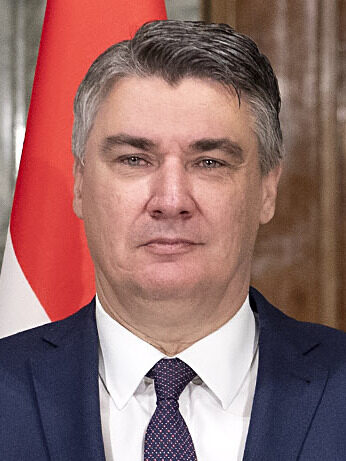 Zoran Milanović (2020–)President of Croatia since 2020
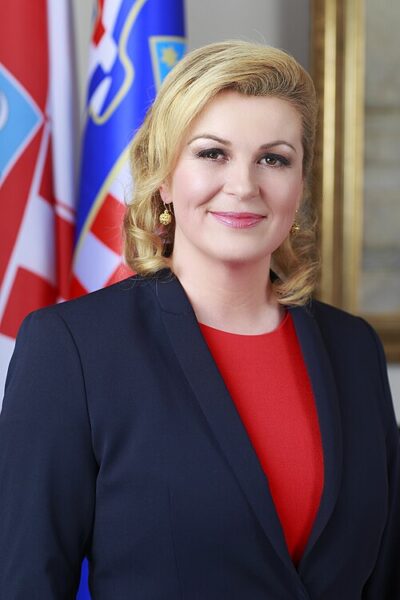 Kolinda Grabar-Kitarović (2015–2020)Croatian politician and diplomat
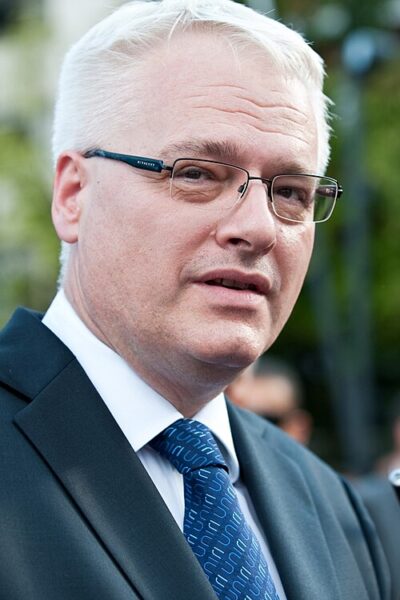 Ivo Josipović (2010–2015)Croatian politician, third President of Croatia
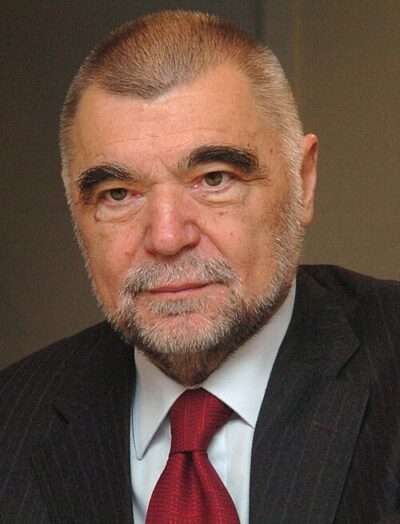 Stjepan Mesić (2000–2010)2nd President of the Republic of Croatia
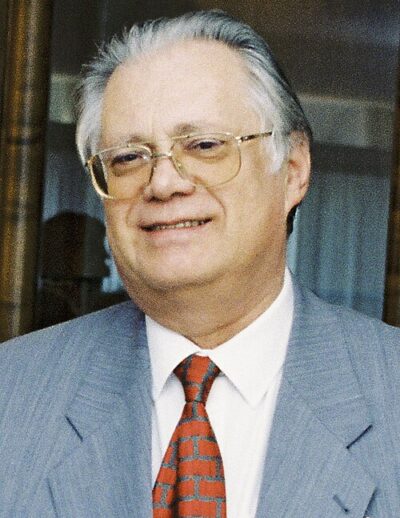 Vlatko Pavletić (1999–2000)Croatian politician (1930–2007)
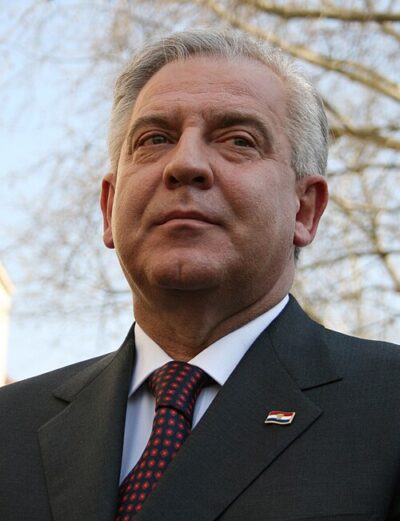 Ivo Sanader (1995–1996)Croatian politician, former Prime Minister
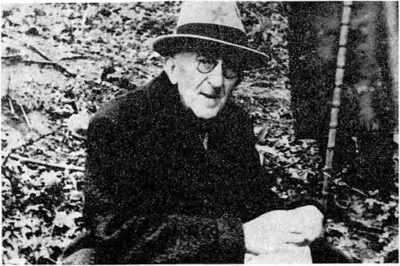 Vladimir Nazor (1946–1949)Croatian writer and politician (1876-1949)
