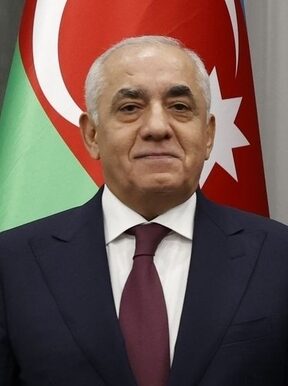
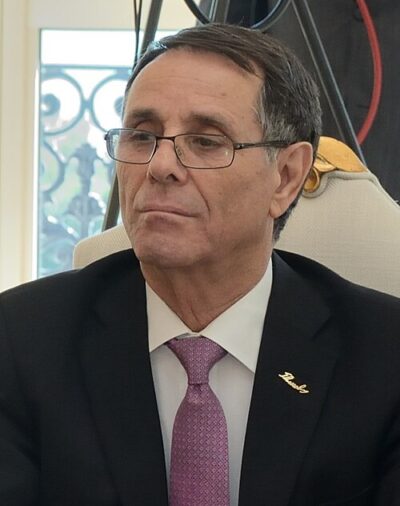
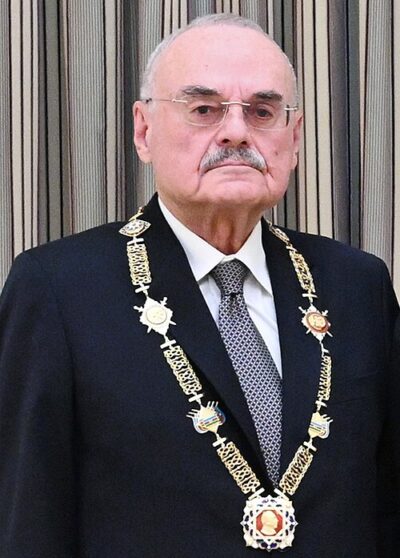
Prime Minister of Azerbaijan
Prime Minister of Azerbaijan is a Head of Government of Azerbaijan. It was created in 1991.
- Office of
- Azerbaijan
- Country
- Azerbaijan
- Created
- February 7, 1991
All 5 facts, and where they come from
Facts
5 facts · 0 confirmed by two sources · 0 cited · 5 from one source
Where this comes from
Papalocal keeps its own record. It started from these sources; what each one said is kept here as it was copied, so a change on their side never changes this page by itself. Tap one to read its version.
What Wikidata says · copied November 17, 2026 · revision 2547790756
- Described as
- Head of Government of Azerbaijan
- What it is
- public office
- Created
- February 7, 1991
- Country
- Azerbaijan
- Office of
- Azerbaijan · 1 reference
- Official website
- http://cabmin.gov.az · 1 reference
- Wikipedias with a page
- 31
Wikidata item Q946064 (wikidata.org/wiki/Q946064), public domain (CC0). Copied 2026-11-17.
What Wikipedia says · copied November 17, 2026 · revision 1380805914
The Prime Minister of the Republic of Azerbaijan (Azerbaijani: Azərbaycan Respublikasının Baş naziri) is the head of government of Azerbaijan. The current prime minister is Ali Asadov on 8 October 2019 following the removal of Novruz Mammadov.
Due to the central role of the president in the political system, the activities of the executive branch (including the prime minister) are significantly influenced by the head of state (for example, it is the president who appoints and dismisses the Prime Minister and other members of the Government; the president may chair the meetings of the cabinet and give obligatory orders to the prime minister and other members of the Government, the president may also revoke any act of the Government).
From the Wikipedia article “Prime Minister of Azerbaijan” (en.wikipedia.org/wiki/Prime_Minister_of_Azerbaijan), by its contributors, under CC BY-SA 4.0 (creativecommons.org/licenses/by-sa/4.0/). Copied 2026-11-17; not changed.
Confirmed Two sources agree. Cited One source, and it names where it got it. One source One source, without a reference of its own. Sources disagree The sources disagree. We show the best-supported value and keep theirs below.