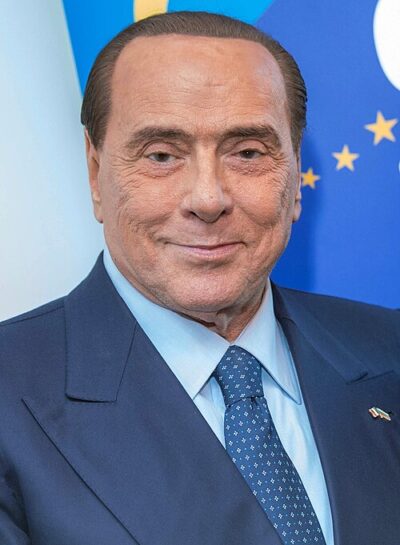
Propaganda Due
Propaganda Due is a Masonic lodge founded in 1877.
- Founded
- 1877
- Country
- Italy
All 7 facts, and where they come from
Facts
7 facts · 0 confirmed by two sources · 7 cited · 0 from one source
Where this comes from
Papalocal keeps its own record. It started from these sources; what each one said is kept here as it was copied, so a change on their side never changes this page by itself. Tap one to read its version.
What Wikidata says · copied November 17, 2026 · revision 2552577493
- Described as
- Masonic lodge founded in 1877
- Other names
- P2, P2 scandal
- What it is
- Masonic lodge · 1 reference
- Created by
- Piano di rinascita democratica · 1 reference
- Founded
- 1877 · 1 reference
- Ended
- 1982 · 1 reference
- Located in
- Italy · 1 reference
- Country
- Italy · 1 reference
- Chair
- Licio Gelli (1970–1984) · 1 reference
- Wikipedias with a page
- 33
Wikidata item Q954078 (wikidata.org/wiki/Q954078), public domain (CC0). Copied 2026-11-17.
What Wikipedia says · copied November 17, 2026 · revision 1384664101
Propaganda Due (Italian: [propaˈɡanda ˈduːe], P2) was a Masonic lodge, founded in 1877, within the tradition of Continental Freemasonry and under the authority of Grand Orient of Italy. Its Masonic charter was withdrawn in 1976, and it was transformed by Licio Gelli into an international, illegal, clandestine, anti-communist, anti-Soviet, anti-Marxist, and radical right criminal organization and secret society operating in contravention of Article 18 of the Constitution of Italy that banned all such secret associations. Gelli continued to operate the unaffiliated lodge from 1976 to 1984. P2 was implicated in numerous Italian crimes and mysteries, including the collapse of the Holy See-affiliated Banco Ambrosiano, the contract killings of journalist Carmine Pecorelli and mobbed-up banker Roberto Calvi, and political corruption cases within the nationwide mani pulite bribery scandal. P2 came to light through the investigations into the collapse of Michele Sindona's financial empire.
P2 was sometimes referred to as a "state within a state" or a "shadow government". The lodge had among its members prominent journalists, members of the Italian parliament, industrialists, and senior Italian military officers —including Silvio Berlusconi, who later became Prime Minister of Italy; the House of Savoy pretender to the Italian throne Prince Victor Emmanuel; and the heads of all three Italian foreign intelligence services (at the time SISDE, SISMI, and CESIS). When searching Gelli's villa in 1982, police found a document entitled "Plan for Democratic Rebirth", which called for the consolidation of the media, the suppression of Italian labour unions, and the rewriting of the Italian constitution, culminating in a creeping hollowing-out of the State.
Outside of Italy, P2 had many active lodges in Venezuela, Uruguay, Brazil, Chile, and Argentina. Among its Argentine members were Raúl Alberto Lastiri, who was briefly interim president of the country after the end of the self-styled "Argentine Revolution" dictatorship (1966–1973); Emilio Massera, who was part of the military junta led by Jorge Rafael Videla during Argentina's last civil-military dictatorship (1976–1983); the Peronist orthodox José López Rega, who was Minister of Social Welfare (1973–1975) and founder of the paramilitary organisation Argentine Anticommunist Alliance (AAA); and former Argentine Army general, Dirty War perpetrator, and convicted murderer Guillermo Suárez Mason.
P2's leader, Gelli, has been recognized in the 2020s as the mastermind behind the 1980 Bologna massacre, the deadliest terrorist attack in post-WWII Italy.
From the Wikipedia article “Propaganda Due” (en.wikipedia.org/wiki/Propaganda_Due), by its contributors, under CC BY-SA 4.0 (creativecommons.org/licenses/by-sa/4.0/). Copied 2026-11-17; not changed.
Confirmed Two sources agree. Cited One source, and it names where it got it. One source One source, without a reference of its own. Sources disagree The sources disagree. We show the best-supported value and keep theirs below.
Picture: Wikimedia Commons: Licio Gelli in paramenti.jpg · See Commons file page