Pruitt–Igoe
Pruitt–Igoe is a former public housing in St. Louis, Missouri. It came out in 1955.
- Came out
- 1955
All 5 facts, and where they come from
Facts
5 facts · 0 confirmed by two sources · 2 cited · 3 from one source
Where this comes from
Papalocal keeps its own record. It started from these sources; what each one said is kept here as it was copied, so a change on their side never changes this page by itself. Tap one to read its version.
What Wikidata says · copied November 17, 2026 · revision 2550105918
- Described as
- former public housing in St. Louis, Missouri
- What it is
- public housing
- Came out
- 1955 · 1 reference
- Ended
- 1970s · 1 reference
- Located in
- St. Louis · 1 reference
- Country
- United States · 1 reference
- Wikipedias with a page
- 26
Wikidata item Q165316 (wikidata.org/wiki/Q165316), public domain (CC0). Copied 2026-11-17.
What Wikipedia says · copied November 17, 2026 · revision 1383690898
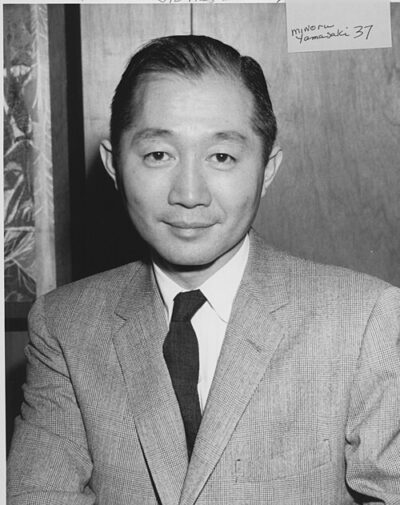
The Wendell O. Pruitt Homes and William Igoe Apartments, known together as Pruitt–Igoe (), were joint urban housing projects first occupied in 1954 in St. Louis, Missouri, United States. The complex of 33 eleven-story high rises was designed in the modernist architectural style by Minoru Yamasaki. At the time of opening, it was one of the largest public housing developments in the country. It was constructed with federal funds on the site of a former slum as part of the city's urban renewal program. Despite being legally integrated, it almost exclusively accommodated African Americans.
Although initially viewed as an improvement over the tenement housing it replaced, living conditions in Pruitt–Igoe began to deteriorate soon after completion. By the mid-1960s it was plagued by poor maintenance and crime, particularly vandalism and juvenile delinquency. Numerous initiatives to reverse the decline failed, and by 1970 more than two-thirds of the complex was vacant. Demolition of the complex began in 1972 with a televised implosion of several of the buildings. Over the next four years, the rest of the complex was vacated and demolished.
In the aftermath of its demolition, Pruitt–Igoe became a symbol of the failings of the society-changing aspirations of modernist architecture, as the project's problems were widely attributed to architectural flaws that created a hostile and unsafe environment. Critic Charles Jencks described its demolition as "the day Modern architecture died". More recent appraisals have placed a greater emphasis on St. Louis's precipitously declining population, and fiscal problems with the local housing authority. The Architectural Review states in a summary of the modern consensus that the project was "doomed from the outset". As of 2024, a large portion of the Pruitt–Igoe site remains vacant, although new development is pending.
From the Wikipedia article “Pruitt–Igoe” (en.wikipedia.org/wiki/Pruitt–Igoe), by its contributors, under CC BY-SA 4.0 (creativecommons.org/licenses/by-sa/4.0/). Copied 2026-11-17; not changed.
Confirmed Two sources agree. Cited One source, and it names where it got it. One source One source, without a reference of its own. Sources disagree The sources disagree. We show the best-supported value and keep theirs below.
Picture: Wikimedia Commons: Pruitt-igoeUSGS02.jpg · See Commons file page