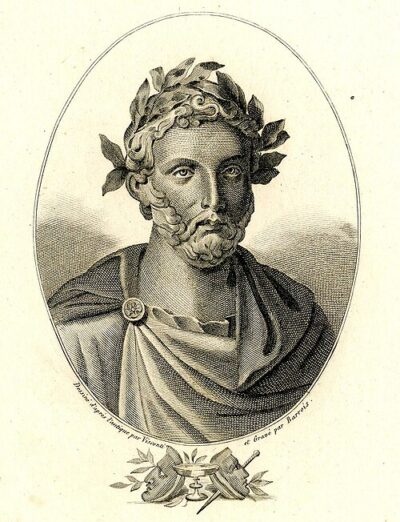
Pseudolus
Pseudolus is an Ancient Roman play by Plautus.
- Written by
- Plautus
- Genre
- fabula palliata
All 4 facts, and where they come from
Facts
4 facts · 0 confirmed by two sources · 2 cited · 2 from one source
Where this comes from
Papalocal keeps its own record. It started from these sources; what each one said is kept here as it was copied, so a change on their side never changes this page by itself. Tap one to read its version.
What Wikidata says · copied November 17, 2026 · revision 2567914672
- Described as
- Ancient Roman play by Plautus
- Other names
- Pl. Ps.
- What it is
- literary work
- Written by
- Plautus · 1 reference
- Genre
- fabula palliata
- Language
- Latin · 1 reference
- Wikipedias with a page
- 16
Wikidata item Q1233667 (wikidata.org/wiki/Q1233667), public domain (CC0). Copied 2026-11-17.
What Wikipedia says · copied November 17, 2026 · revision 1384232904
Pseudolus is a play by the ancient Roman playwright Titus Maccius Plautus. It is one of the earliest examples of Roman literature and is a key example of the Fabulae Palliatae which are early Roman Comedies set in a Classical Greek setting. Pseudolus was first shown in 191 BC during the Megalesian Festival, which was a celebration for the Phrygian goddess Cybele. The temple for worship of Cybele in Rome was completed during the same year in time for the festival.
Pseudolus was written in Plautus's old age (he was probably over 60 at the time): Cicero mentions it in his book on Old Age as an example of a work written by older men. It proved to be very popular and was frequently revived. Cicero records that in his day the famous actor Roscius frequently took the part of Ballio.
Malcolm M. Willcock calls this play "Plautus' masterpiece". He adds: "For the special qualities of Plautus – vigour, wit, invention, the charm of low-class humanity – this play is supreme."
From the Wikipedia article “Pseudolus” (en.wikipedia.org/wiki/Pseudolus), by its contributors, under CC BY-SA 4.0 (creativecommons.org/licenses/by-sa/4.0/). Copied 2026-11-17; not changed.
Confirmed Two sources agree. Cited One source, and it names where it got it. One source One source, without a reference of its own. Sources disagree The sources disagree. We show the best-supported value and keep theirs below.