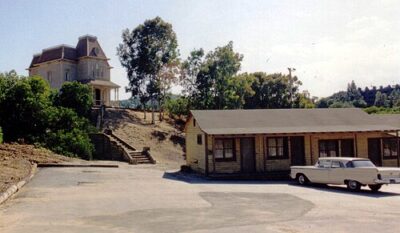
Psycho
Psycho is a novel by Robert Bloch (1959). It is part of Psycho tetralogy.
- Published
- 1959
- Written by
- Robert Bloch
- Genre
- horror fiction
- Country of origin
- United States
All 10 facts, and where they come from
Facts
10 facts · 0 confirmed by two sources · 2 cited · 8 from one source
Where this comes from
Papalocal keeps its own record. It started from these sources; what each one said is kept here as it was copied, so a change on their side never changes this page by itself. Tap one to read its version.
What Wikidata says · copied November 17, 2026 · revision 2541604183
- Described as
- novel by Robert Bloch (1959)
- What it is
- literary work
- Written by
- Robert Bloch · 1 reference
- Publisher
- Simon & Schuster
- Genre
- horror fiction; thriller
- Published
- 1959 · 1 reference
- Language
- English
- Country of origin
- United States
- Part of the series
- Psycho tetralogy
- Followed by
- Psycho II
- Wikipedias with a page
- 22
Wikidata item Q1275361 (wikidata.org/wiki/Q1275361), public domain (CC0). Copied 2026-11-17.
What Wikipedia says · copied November 17, 2026 · revision 1384264374
Psycho is a 1959 horror novel by American writer Robert Bloch, originally published by Simon & Schuster under its Inner Sanctum Mystery imprint.
The novel tells the story of Norman Bates, a caretaker at an isolated motel who struggles under his domineering mother and becomes embroiled in a series of murders. The novel is considered Bloch's most enduring work and one of the most influential horror novels of the 20th century.
The story was adapted into Alfred Hitchcock's 1960 film of the same name, and adapted into the television series Bates Motel (2013–2017). Bloch later wrote two sequels, which are unrelated to any of the film sequels.
From the Wikipedia article “Psycho (novel)” (en.wikipedia.org/wiki/Psycho_(novel)), by its contributors, under CC BY-SA 4.0 (creativecommons.org/licenses/by-sa/4.0/). Copied 2026-11-17; not changed.
Confirmed Two sources agree. Cited One source, and it names where it got it. One source One source, without a reference of its own. Sources disagree The sources disagree. We show the best-supported value and keep theirs below.
Picture: Ipsingh at English Wikipedia, via Wikimedia Commons · Public domain