
public choice theory
Public choice theory is an economic theory applied to political science.
All 1 facts, and where they come from
Facts
1 facts · 0 confirmed by two sources · 0 cited · 1 from one source
Where this comes from
Papalocal keeps its own record. It started from these sources; what each one said is kept here as it was copied, so a change on their side never changes this page by itself. Tap one to read its version.
What Wikidata says · copied November 16, 2026 · revision 2494927758
- Described as
- economic theory applied to political science
- What it is
- academic discipline
- Wikipedias with a page
- 35
Wikidata item Q674530 (wikidata.org/wiki/Q674530), public domain (CC0). Copied 2026-11-16.
What Wikipedia says · copied November 16, 2026 · revision 1385871648
Public choice, or public choice theory, is a formal theory of political and social science that applies economic methods—namely, rational choice theory, game theory, decision theory, and social choice theory—to study political agents (e.g. officials, bureaucrats, and voters) and their interactions. Public choice research includes theories of political behaviour, political economics, public economy, and constitutional economics.
Public choice theories generally share a number of assumptions, methods, and areas of interest. Researchers emphasise the applicability of markets in the political system, the self-interested nature of agents, and the nature of decisions as a combination of individual choices rather than as an aggregate whole. Empirical methods are also relied upon by some public choice theorists in testing and validating economic models of public choice.
Several notable public choice scholars have been awarded the Nobel Prize in Economics, including Kenneth Arrow (1972), James M. Buchanan (1986), George Stigler (1982), Gary Becker (1992), Amartya Sen (1998), Vernon Smith (2002), and Elinor Ostrom (2009). Buchanan, Smith, and Ostrom were former presidents of the Public Choice Society.
From the Wikipedia article “Public choice” (en.wikipedia.org/wiki/Public_choice), by its contributors, under CC BY-SA 4.0 (creativecommons.org/licenses/by-sa/4.0/). Copied 2026-11-16; not changed.
Confirmed Two sources agree. Cited One source, and it names where it got it. One source One source, without a reference of its own. Sources disagree The sources disagree. We show the best-supported value and keep theirs below.
People connected 1
Known for it
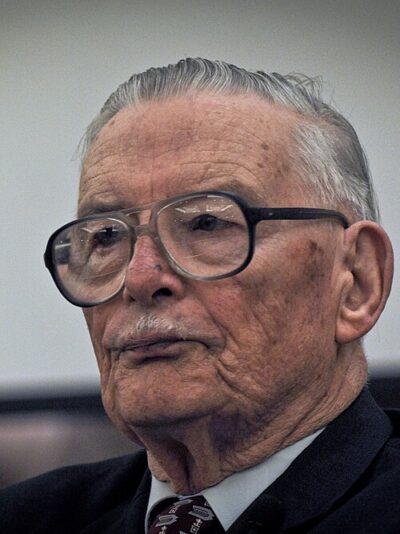 James M. BuchananAmerican economist, recipient of the Nobel Memorial Prize for Economics (1919–2013)
