Radical Faeries
Radical Faeries is a 1979 counter-cultural movement. It was founded by Harry Hay and John Burnside.
- Founded
- 1979
- Founded by
- Harry Hay
All 5 facts, and where they come from
Facts
5 facts · 0 confirmed by two sources · 2 cited · 3 from one source
Where this comes from
Papalocal keeps its own record. It started from these sources; what each one said is kept here as it was copied, so a change on their side never changes this page by itself. Tap one to read its version.
What Wikidata says · copied November 17, 2026 · revision 2557649840
- Described as
- 1979 counter-cultural movement
- Other names
- radfae
- What it is
- political movement; LGBTQ+ organization
- Founded
- 1979
- Founded by
- Harry Hay · 1 reference; John Burnside · 1 reference
- Wikipedias with a page
- 13
Wikidata item Q2162206 (wikidata.org/wiki/Q2162206), public domain (CC0). Copied 2026-11-17.
What Wikipedia says · copied November 17, 2026 · revision 1383574667
Radical Faeries are a loosely affiliated worldwide network and countercultural movement blending queer consciousness and secular spirituality. Sharing various aspects with neopaganism, the movement also adopts elements from anarchism and environmentalism. Rejecting hetero-imitation, the Radical Faerie movement began during the 1970s sexual revolution among gay men in the United States. Gay activists Harry Hay, Mitch Walker, Don Kilhefner, and John Burnside organized the first Spiritual Conference for Radical Faeries in September 1979.
The network subsequently evolved alongside queer rights expansions, engaging with eclectic constructs and rituals while challenging commercialized and patriarchal aspects of modern LGBTQ+ life. Faeries tend to be fiercely independent, anti-establishment, and community-focused. Contemporary Radical Faeries embody a wide range of genders, sexual orientations, and identities.
From the Wikipedia article “Radical Faeries” (en.wikipedia.org/wiki/Radical_Faeries), by its contributors, under CC BY-SA 4.0 (creativecommons.org/licenses/by-sa/4.0/). Copied 2026-11-17; not changed.
Confirmed Two sources agree. Cited One source, and it names where it got it. One source One source, without a reference of its own. Sources disagree The sources disagree. We show the best-supported value and keep theirs below.
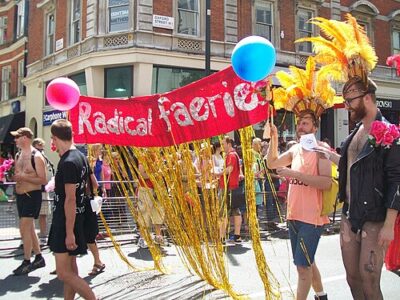
Picture: AnemoneProjectors (talk), via Wikimedia Commons · CC BY-SA 2.0