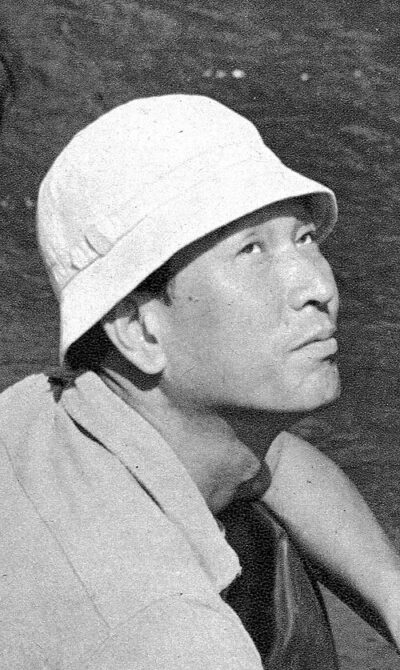
Ran
Ran is a 1985 film by Akira Kurosawa. It stars Tatsuya Nakadai, Akira Terao and Jinpachi Nezu. It is based on King Lear. It won the Amanda Award for Best Foreign Feature Film and 1 more.
- Released
- 1985
- Directed by
- Akira Kurosawa
- Genre
- war film
- Country of origin
- Japan
All 24 facts, and where they come from
Facts
24 facts · 0 confirmed by two sources · 15 cited · 9 from one source
Where this comes from
Papalocal keeps its own record. It started from these sources; what each one said is kept here as it was copied, so a change on their side never changes this page by itself. Tap one to read its version.
What Wikidata says · copied November 17, 2026 · revision 2566168533
- Described as
- 1985 film by Akira Kurosawa
- What it is
- film
- Directed by
- Akira Kurosawa · 7 references
- Music by
- Tōru Takemitsu
- Screenplay by
- Akira Kurosawa
- Produced by
- Serge Silberman
- Starring
- Tatsuya Nakadai · 7 references; Akira Terao · 4 references; Jinpachi Nezu · 4 references; Daisuke Ryū · 1 reference; Mieko Harada · 4 references; Peter · 2 references; Hitoshi Ueki · 2 references; Jun Tazaki · 2 references; Hisashi Igawa · 3 references; Mansai Nomura II · 1 reference
- Genre
- war film · 1 reference; drama film · 1 reference
- Released
- June 1, 1985 · 1 reference; April 10, 1986 · 1 reference; September 18, 1985
- Original language
- Japanese
- Country of origin
- Japan · 4 references; France · 3 references
- Based on
- King Lear
- Awards
- Amanda Award for Best Foreign Feature Film (1986); Academy Award for Best Costume Design (1986) · 1 reference
- Wikipedias with a page
- 52
Wikidata item Q565231 (wikidata.org/wiki/Q565231), public domain (CC0). Copied 2026-11-17.
What Wikipedia says · copied November 17, 2026 · revision 1383337893
Ran (Japanese: 乱; lit. 'chaos' or 'tumult') is a 1985 epic historical action drama film directed, co-written, and edited by Akira Kurosawa. The plot derives from William Shakespeare's King Lear and includes segments based on legends of the daimyō Mōri Motonari. The film stars Tatsuya Nakadai as Hidetora Ichimonji, an aging Sengoku-period warlord who decides to abdicate as ruler in favor of his three sons.
Like most of Kurosawa's work in the 1970s and 80s, Ran is an international production, in this case a Japanese-French venture produced by Herald Ace, Nippon Herald Films, and Greenwich Film Productions. Production planning went through a long period of preparation. Kurosawa conceived the idea of Ran in the mid-1970s, when he read about Motonari, who was famous for having three highly loyal sons. Kurosawa devised a plot in which the sons become antagonists of their father. Although the film became heavily inspired by Shakespeare's play King Lear, Kurosawa began using it only after he had started preparations for Ran. Following these preparations, Kurosawa filmed Dersu Uzala in 1975, followed by Kagemusha in the early 1980s, before securing financial backing to film Ran.
Ran was Kurosawa's third encounter with Shakespeare during his career. In 1957, Kurosawa directed Throne of Blood, based on Shakespeare's Macbeth. In 1960, he directed the film The Bad Sleep Well, based on Hamlet. All three films have received critical acclaim.
As Kurosawa's last epic, Ran has often been cited as among his finest achievements and is widely regarded as one of the greatest films ever made. With a budget of $11–12 million, it was among the most expensive films in the history of Japanese cinema upon its release. Ran was previewed on May 31, 1985, at the Tokyo International Film Festival before its release on June 1, 1985, in Japan. The film was hailed for its powerful images and use of color; costume designer Emi Wada won an Academy Award for Best Costume Design for her work on Ran, and Kurosawa received his only career nomination for Best Director. The distinctive film score, inspired by Gustav Mahler, was composed by Toru Takemitsu.
From the Wikipedia article “Ran (film)” (en.wikipedia.org/wiki/Ran_(film)), by its contributors, under CC BY-SA 4.0 (creativecommons.org/licenses/by-sa/4.0/). Copied 2026-11-17; not changed.
Confirmed Two sources agree. Cited One source, and it names where it got it. One source One source, without a reference of its own. Sources disagree The sources disagree. We show the best-supported value and keep theirs below.