reflecting telescope
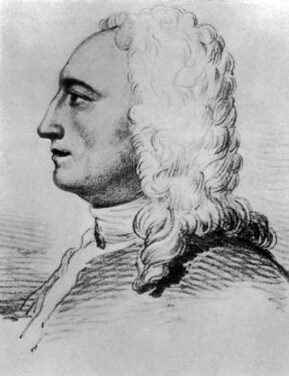
Reflecting telescope is a telescope design that collects and focuses light with a combination of mirrors. It was created by Isaac Newton and John Hadley.
- Created by
- Isaac Newton (1668)
All 3 facts, and where they come from
Facts
3 facts · 0 confirmed by two sources · 2 cited · 1 from one source
Where this comes from
Papalocal keeps its own record. It started from these sources; what each one said is kept here as it was copied, so a change on their side never changes this page by itself. Tap one to read its version.
What Wikidata says · copied November 18, 2026 · revision 2513574017
- Described as
- telescope design that collects and focuses light with a combination of mirrors
- Other names
- reflector, catoptric telescope
- What it is
- astronomical instrument
- Created by
- Isaac Newton (1668) · 1 reference; John Hadley (1721) · 1 reference
- Wikipedias with a page
- 43
Wikidata item Q35221 (wikidata.org/wiki/Q35221), public domain (CC0). Copied 2026-11-18.
What Wikipedia says · copied November 18, 2026 · revision 1373821916
A reflecting telescope (also called a reflector) is a telescope that uses a single or a combination of curved mirrors that reflect light and form an image. The reflecting telescope was invented in the 17th century by Isaac Newton as an alternative to the refracting telescope which, at that time, was a design that suffered from severe chromatic aberration. Although reflecting telescopes produce other types of optical aberrations, it is a design that allows for very large diameter objectives. Almost all of the major telescopes used in astronomy research are reflectors. Many variant forms are in use and some employ extra optical elements to improve image quality or place the image in a mechanically advantageous position. Since reflecting telescopes use mirrors, the design is sometimes referred to as a catoptric telescope.
From the time of Newton to the 19th century, the mirror itself was made of metal – usually speculum metal. This type included Newton's first designs and the largest telescope of the 19th century, the Leviathan of Parsonstown with a 6 feet (1.8 m) wide metal mirror. However, speculum metal mirrors reflected only about 2⁄3 of the light and tarnished easily, thus requiring frequent re-polishings. By the mid-19th century, the use of silvered-glass mirrors in reflecting telescopes had become more popular due to their relative cheapness and resistance to tarnish.
Reflecting telescopes have become extraordinarily popular, from famous, large-scale telescopes, such as the Hubble Space Telescope, all the way down to smaller amateur models. In addition, the reflection telescope principle was applied to other electromagnetic wavelengths; for example, X-ray telescopes similarly use the reflection principle to make image-forming optics.
From the Wikipedia article “Reflecting telescope” (en.wikipedia.org/wiki/Reflecting_telescope), by its contributors, under CC BY-SA 4.0 (creativecommons.org/licenses/by-sa/4.0/). Copied 2026-11-18; not changed.
Confirmed Two sources agree. Cited One source, and it names where it got it. One source One source, without a reference of its own. Sources disagree The sources disagree. We show the best-supported value and keep theirs below.