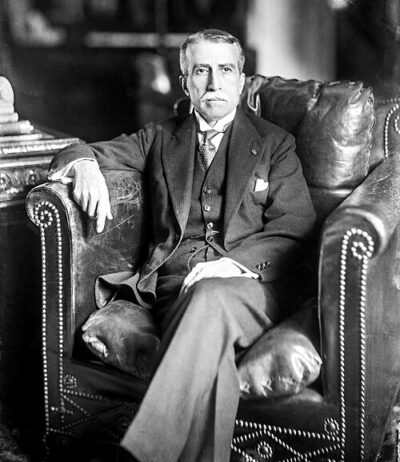
Reformist Democratic Party
The Reformist Democratic Party is a Peruvian political party, 1920-1932, founded by Augusto Leguía y Salcedo. Its headquarters are in Lima. It stands for authoritarianism.
- Country
- Peru
- Founded
- 1920
- Ideology
- authoritarianism
All 7 facts, and where they come from
Facts
7 facts · 0 confirmed by two sources · 0 cited · 7 from one source
Where this comes from
Papalocal keeps its own record. It started from these sources; what each one said is kept here as it was copied, so a change on their side never changes this page by itself. Tap one to read its version.
What Wikidata says · copied November 17, 2026 · revision 2430952037
- Described as
- Peruvian political party, 1920-1932, founded by Augusto Leguía y Salcedo
- What it is
- political party
- Founded
- 1920 · 1 reference
- Ended
- 1932
- Founded by
- Augusto Leguía
- Headquarters
- Lima
- Country
- Peru
- Ideology
- authoritarianism
- Wikipedias with a page
- 4
Wikidata item Q7307555 (wikidata.org/wiki/Q7307555), public domain (CC0). Copied 2026-11-17.
What Wikipedia says · copied November 17, 2026 · revision 1379059268
Reformist Democratic Party (in Spanish: Partido Democrático Reformista) was a political party in Peru. It was founded in 1920 by Augusto Bernardino Leguía y Salcedo, whose regime, which began the previous year, had led to a dictatorial government. It was a party with a strong personal character, whose members included the friends and relatives of President Leguía, as well as many public employees. It lacked an ideology and an authentic program and was only organized to support Leguía in the perpetuation of him in power. After the fall of Leguía in 1930, it did not again have a leading role in Peruvian politics and ended up dissolving.
From the Wikipedia article “Reformist Democratic Party” (en.wikipedia.org/wiki/Reformist_Democratic_Party), by its contributors, under CC BY-SA 4.0 (creativecommons.org/licenses/by-sa/4.0/). Copied 2026-11-17; not changed.
Confirmed Two sources agree. Cited One source, and it names where it got it. One source One source, without a reference of its own. Sources disagree The sources disagree. We show the best-supported value and keep theirs below.