Religion within the Bounds of Bare Reason
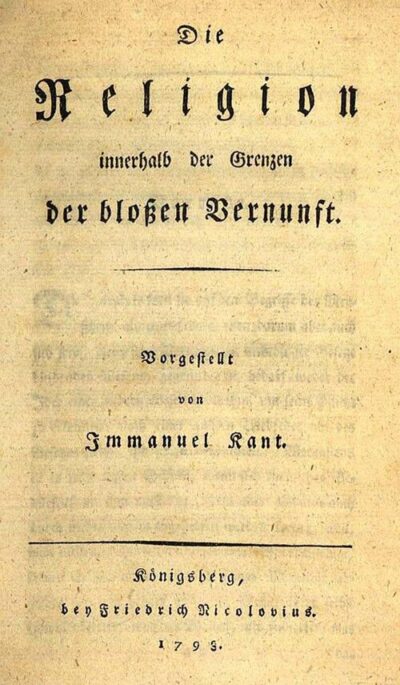
Religion within the Bounds of Bare Reason is an essay by Immanuel Kant. It came out in 1793.
- Published
- 1793
- Written by
- Immanuel Kant
- Genre
- essay
- Country of origin
- Germany
All 6 facts, and where they come from
Facts
6 facts · 0 confirmed by two sources · 0 cited · 6 from one source
Where this comes from
Papalocal keeps its own record. It started from these sources; what each one said is kept here as it was copied, so a change on their side never changes this page by itself. Tap one to read its version.
What Wikidata says · copied November 17, 2026 · revision 2469692735
- Described as
- essay by Immanuel Kant
- What it is
- written work
- Written by
- Immanuel Kant
- Genre
- essay
- Published
- 1793
- Language
- German
- Country of origin
- Germany
- Wikipedias with a page
- 14
Wikidata item Q1215763 (wikidata.org/wiki/Q1215763), public domain (CC0). Copied 2026-11-17.
What Wikipedia says · copied November 17, 2026 · revision 1384321303
Religion within the Bounds of Bare Reason (German: Die Religion innerhalb der Grenzen der bloßen Vernunft) is a 1793 book by the German philosopher Immanuel Kant. Although its purpose and original intent has become a matter of some dispute, the book's immense and lasting influence on the history of theology and the philosophy of religion is indisputable.
He strongly criticises ritual, superstition and a church hierarchy in this work. He also discusses issues and topics central to his religious and moral philosophy including the relationships between rationality, ethics, and religion.
From the Wikipedia article “Religion within the Bounds of Bare Reason” (en.wikipedia.org/wiki/Religion_within_the_Bounds_of_Bare_Reason), by its contributors, under CC BY-SA 4.0 (creativecommons.org/licenses/by-sa/4.0/). Copied 2026-11-17; not changed.
Confirmed Two sources agree. Cited One source, and it names where it got it. One source One source, without a reference of its own. Sources disagree The sources disagree. We show the best-supported value and keep theirs below.
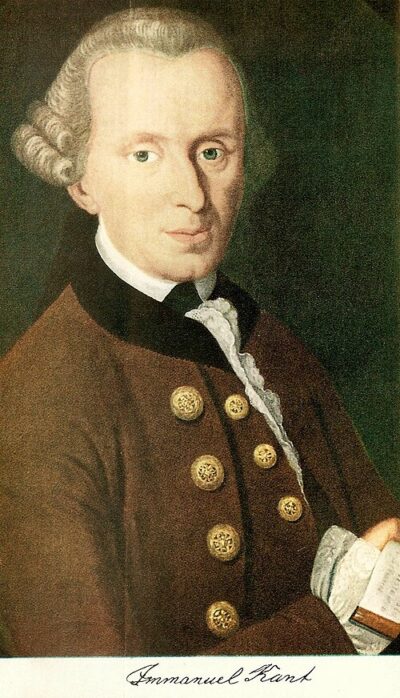
Picture: Immanuel Kant, via Wikimedia Commons · Public domain