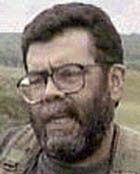
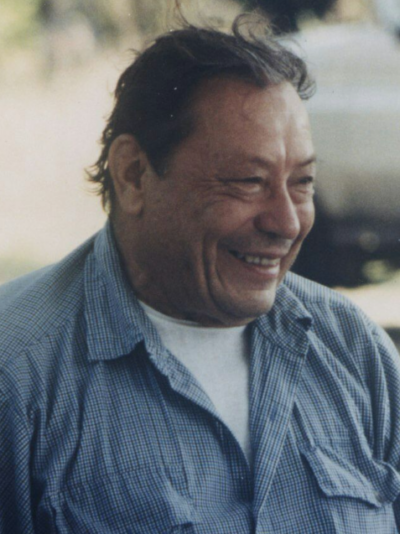
Revolutionary Armed Forces of Colombia
Revolutionary Armed Forces of Colombia is a Colombian guerrilla movement. It was founded in 1964. It stands for Marxism–Leninism and Bolivarianism.
- Country
- Colombia
- Founded
- 1964
- Ideology
- Marxism–Leninism
- Chair
- Rodrigo Londoño
All 8 facts, and where they come from
Facts
8 facts · 0 confirmed by two sources · 0 cited · 8 from one source
Where this comes from
Papalocal keeps its own record. It started from these sources; what each one said is kept here as it was copied, so a change on their side never changes this page by itself. Tap one to read its version.
What Wikidata says · copied November 18, 2026 · revision 2538461812
- Described as
- Colombian guerrilla movement
- Other names
- FARC, Revolutionary Armed Forces of Colombia—People's Army, FARC–EP
- What it is
- guerrilla organization; terrorist organization
- Founded
- 1964
- Ended
- 2016
- Country
- Colombia
- Chair
- Rodrigo Londoño
- Ideology
- Marxism–Leninism; Bolivarianism · 1 reference
- Wikipedias with a page
- 67
Wikidata item Q155801 (wikidata.org/wiki/Q155801), public domain (CC0). Copied 2026-11-18.
What Wikipedia says · copied November 18, 2026 · revision 1385663770
The Revolutionary Armed Forces of Colombia – People's Army (Spanish: Fuerzas Armadas Revolucionarias de Colombia – Ejército del Pueblo, FARC–EP or FARC) was a far-left Marxist–Leninist guerrilla group involved in the continuing Colombian conflict starting in 1964. The FARC–EP was officially founded in 1966 from peasant self-defense groups formed from 1948 during La Violencia as a peasant force promoting a political line of agrarianism and anti-imperialism. They were known to employ a variety of military tactics, in addition to more unconventional methods, including terrorism.
The operations of the FARC–EP were funded by kidnap and ransom, mining, extortion, and taxation of various forms of economic activity, and the production and distribution of drugs. They are only one actor in a complex conflict where atrocities have been committed by the state, right-wing paramilitaries, and left-wing guerrillas not limited to FARC, such as ELN, M-19, and others. Colombia's National Centre for Historical Memory, a government agency, has estimated that between 1981 and 2012 paramilitary groups have caused 38.4% of the civilian deaths, while the Guerillas are responsible for 16.8%, the Colombian Security Forces for 10.1%, and other non-identified armed groups for 27.7%. The National Centre for Historical Memory has also concluded that of the 27,023 kidnappings carried out between 1970 and 2010, the Guerillas were responsible for 90.6% of them.
The strength of the FARC–EP forces was high; in 2007, the FARC said they were an armed force of 18,000 men and women; in 2010, the Colombian military calculated that FARC forces consisted of about 13,800 members, 50 percent of whom were armed guerrilla combatants; and in 2011 the president of Colombia, Juan Manuel Santos, said that FARC–EP forces comprised fewer than 10,000 members. The Colombian Ministry of Defense reported 19,504 deserters, or individually demobilized members, from the FARC between August 2002 and their collective demobilization in 2017, despite potentially severe punishment, including execution, for attempted desertion in the FARC.
FARC made 239 attacks on the energy infrastructure; however, they showed signs of fatigue. By 2014, the FARC were not seeking to engage in outright combat with the army, instead concentrating on small-scale ambushes against isolated army units. Meanwhile, from 2008 to 2017, the FARC opted to attack police patrols with home-made mortars, sniper rifles, and explosives, as they were not considered strong enough to engage police units directly. This followed the trend of the 1990s during the strengthening of Colombian government forces.
In June 2016, the FARC signed a ceasefire accord with President Santos in Havana. This accord was seen as an historic step to ending the war that has gone on for fifty years. Santos announced that four years of negotiation had secured a peace deal with FARC and that a national referendum to ratify the deal would take place on 2 October. The referendum failed with 50.24% voting against. In November 2016, the Colombian government and the FARC signed a revised peace deal, which was approved by Congress.
On 27 June 2017, FARC ceased to be an armed group, disarming itself and handing over its weapons to the United Nations. A month later, FARC announced its reformation as a legal political party, later renamed the Commons, in accordance with the terms of the peace deal. However, about 2,000 to 2,500 FARC dissidents still take on FARC's original doctrine and continue with drug trafficking, though far smaller than the group at its peak.
A small faction of FARC leaders announced a return to armed activity on 29 August 2019, stating that the Colombian government did not respect peace agreements, a position Colombian officials disagreed with. The Colombian government responded with preemptive strikes, killing FARC members planning to lead rearmament activities. In October 2023, the Colombian government engaged in peace talks with the FARC splinter group and agreed to a ceasefire. In January, both sides agreed to extend the ceasefire to June 2024.
As of February 2024, the vast majority of former FARC members have honored the 2016 peace agreement. However, in August 2024 the government announced an end to a ceasefire with the smaller dissident FARC faction the Estado Mayor Central, EMC, who reject the 2016 peace deal. In October 2024, the EMC agreed to a new ceasefire with the government.
From the Wikipedia article “Revolutionary Armed Forces of Colombia” (en.wikipedia.org/wiki/Revolutionary_Armed_Forces_of_Colombia), by its contributors, under CC BY-SA 4.0 (creativecommons.org/licenses/by-sa/4.0/). Copied 2026-11-18; not changed.
Confirmed Two sources agree. Cited One source, and it names where it got it. One source One source, without a reference of its own. Sources disagree The sources disagree. We show the best-supported value and keep theirs below.
Picture: Wikimedia Commons: Revolutionary Armed Forces of Colombia (FARC) insurgents.GIF · See Commons file page