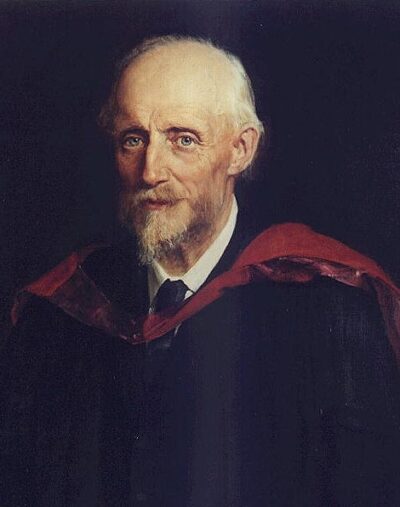
Reynolds transport theorem
Reynolds transport theorem is a 3D generalization of the Leibniz integral rule.
All 2 facts, and where they come from
Facts
2 facts · 0 confirmed by two sources · 0 cited · 2 from one source
Where this comes from
Papalocal keeps its own record. It started from these sources; what each one said is kept here as it was copied, so a change on their side never changes this page by itself. Tap one to read its version.
What Wikidata says · copied November 17, 2026 · revision 2445628473
- Described as
- 3D generalization of the Leibniz integral rule
- What it is
- theorem
- Named after
- Osborne Reynolds · 1 reference
- Wikipedias with a page
- 15
Wikidata item Q953062 (wikidata.org/wiki/Q953062), public domain (CC0). Copied 2026-11-17.
What Wikipedia says · copied November 17, 2026 · revision 1384113077
In differential calculus, the Reynolds transport theorem (also known as the Leibniz–Reynolds transport theorem), or simply the Reynolds theorem, named after Osborne Reynolds (1842–1912), is a three-dimensional generalization of the Leibniz integral rule. It is used to recast time derivatives of integrated quantities and is useful in formulating the basic equations of continuum mechanics.
Consider integrating f = f(x,t) over the time-dependent region Ω(t) that has boundary ∂Ω(t), then taking the derivative with respect to time:
ddt∫Ω(t)𝐟dV.
If we wish to move the derivative into the integral, there are two issues: the time dependence of f, and the introduction of and removal of space from Ω due to its dynamic boundary. Reynolds transport theorem provides the necessary framework.
From the Wikipedia article “Reynolds transport theorem” (en.wikipedia.org/wiki/Reynolds_transport_theorem), by its contributors, under CC BY-SA 4.0 (creativecommons.org/licenses/by-sa/4.0/). Copied 2026-11-17; not changed.
Confirmed Two sources agree. Cited One source, and it names where it got it. One source One source, without a reference of its own. Sources disagree The sources disagree. We show the best-supported value and keep theirs below.