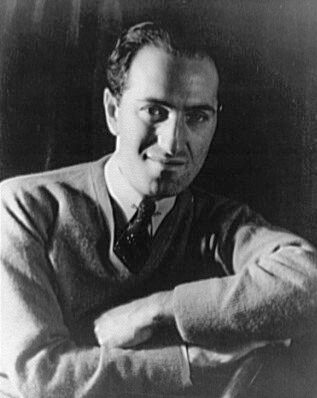
Rhapsody in Blue
Rhapsody in Blue is a 1924 composition by George Gershwin. It is performed by Eumir Deodato and Larry Adler.
- Released
- 1924
- Performed by
- George Gershwin (1924)
- Genre
- classical music
All 10 facts, and where they come from
Facts
10 facts · 0 confirmed by two sources · 2 cited · 8 from one source
Where this comes from
Papalocal keeps its own record. It started from these sources; what each one said is kept here as it was copied, so a change on their side never changes this page by itself. Tap one to read its version.
What Wikidata says · copied November 16, 2026 · revision 2569304067
- Described as
- 1924 composition by George Gershwin
- What it is
- musical work/composition
- Performed by
- George Gershwin (1924); Eumir Deodato (1973); Larry Adler (1994); Da Pump (1998)
- Music by
- George Gershwin · 1 reference
- Genre
- classical music; rhapsody
- Released
- 1924 · 1 reference
- Language
- no linguistic content
- Wikipedias with a page
- 34
Wikidata item Q722599 (wikidata.org/wiki/Q722599), public domain (CC0). Copied 2026-11-16.
What Wikipedia says · copied November 16, 2026 · revision 1384771406
Rhapsody in Blue is a 1924 musical composition for solo piano and jazz band by George Gershwin. Commissioned by bandleader Paul Whiteman, the work combines elements of classical music with jazz-influenced effects and premiered in a concert titled "An Experiment in Modern Music" on February 12, 1924, in Aeolian Hall, New York City. Whiteman's band performed the rhapsody with Gershwin playing the piano. Whiteman's arranger Ferde Grofé orchestrated the rhapsody several times, including the 1924 original scoring, the 1926 pit orchestra scoring, and the 1942 symphonic scoring.
The rhapsody is one of Gershwin's most recognizable creations and a key composition that defined the Jazz Age. Gershwin's piece inaugurated a new era in America's musical history, established his reputation as an eminent composer, and became one of the most popular of all concert works. In the American Heritage magazine, Frederic D. Schwarz posits that the famous opening clarinet glissando has become as instantly recognizable to concert audiences as the opening of Beethoven's Fifth Symphony.
From the Wikipedia article “Rhapsody in Blue” (en.wikipedia.org/wiki/Rhapsody_in_Blue), by its contributors, under CC BY-SA 4.0 (creativecommons.org/licenses/by-sa/4.0/). Copied 2026-11-16; not changed.
Confirmed Two sources agree. Cited One source, and it names where it got it. One source One source, without a reference of its own. Sources disagree The sources disagree. We show the best-supported value and keep theirs below.
Picture: Wikimedia Commons: Rhapsody in Blue cover.jpg · See Commons file page