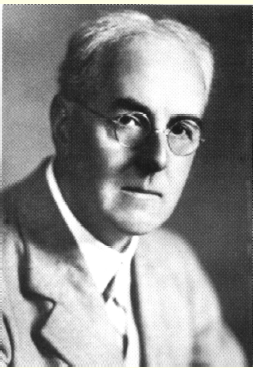
Richardson extrapolation
Richardson extrapolation is a sequence acceleration method, used to improve the rate of convergence.
All 2 facts, and where they come from
Facts
2 facts · 0 confirmed by two sources · 0 cited · 2 from one source
Where this comes from
Papalocal keeps its own record. It started from these sources; what each one said is kept here as it was copied, so a change on their side never changes this page by itself. Tap one to read its version.
What Wikidata says · copied November 17, 2026 · revision 2569401750
- Described as
- a sequence acceleration method, used to improve the rate of convergence
- What it is
- algorithm
- Named after
- Lewis Fry Richardson
- Wikipedias with a page
- 16
Wikidata item Q1063089 (wikidata.org/wiki/Q1063089), public domain (CC0). Copied 2026-11-17.
What Wikipedia says · copied November 17, 2026 · revision 1376360867
In numerical analysis, Richardson extrapolation is a method used to estimate some value A∗=limh→0A(h) if the truncation error is known to have a (possibly 1-sided) power-series expansion at h=0.
The method is most often applied as a sequence acceleration method to improve the rate of convergence of iterative methods.
It is named after Lewis Fry Richardson, who introduced the technique in the early 20th century, though a form of the idea was already known to Christiaan Huygens in the 17th century and used his calculation of π.
Practical applications of Richardson extrapolation include Romberg integration, which applies Richardson extrapolation to the trapezoid rule, and the Bulirsch–Stoer algorithm for solving ordinary differential equations.
In the words of Birkhoff and Rota, "its usefulness for practical computations can hardly be overestimated."
From the Wikipedia article “Richardson extrapolation” (en.wikipedia.org/wiki/Richardson_extrapolation), by its contributors, under CC BY-SA 4.0 (creativecommons.org/licenses/by-sa/4.0/). Copied 2026-11-17; not changed.
Confirmed Two sources agree. Cited One source, and it names where it got it. One source One source, without a reference of its own. Sources disagree The sources disagree. We show the best-supported value and keep theirs below.