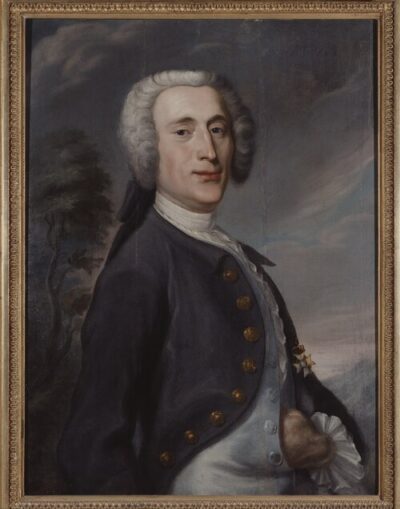
Rikshistoriograf
Rikshistoriograf is a position. It is an office of Sweden.
All 3 facts, and where they come from
Facts
3 facts · 0 confirmed by two sources · 0 cited · 3 from one source
Where this comes from
Papalocal keeps its own record. It started from these sources; what each one said is kept here as it was copied, so a change on their side never changes this page by itself. Tap one to read its version.
What Wikidata says · copied November 18, 2026 · revision 2556198247
- What it is
- position
- Country
- Sweden · 1 reference
- Office of
- Sweden
- Wikipedias with a page
- 2
Wikidata item Q7334102 (wikidata.org/wiki/Q7334102), public domain (CC0). Copied 2026-11-18.
What Wikipedia says · copied November 18, 2026 · revision 873766950
The position of rikshistoriograf (Swedish, known in Latin as historiographus regni, i.e. Historiographer of the Realm or Royal Historiographer), existed in Sweden from the early 17th century until 1834.
The first appointment of a similar nature was that of the Dutch scholar Daniel Heinsius, appointed in 1618 by Gustavus Adolphus to be historicus regni, but it is not known if he did anything as part of this position. In the reign of Queen Christina, several individuals were appointed either just "historiographer" or "historiographer royal", with occasionally several at the same time holding the position. In 1642, Arnold Johan Messenius and Johannes Loccenius are mentioned as historiographers, a couple of years later Bogislaus Philipp von Chemnitz, and a few years later they are all called rikshistoriograf. The title was also given to Johannes Casparus Freinsheimius and Johan Henrik Boeclerus. Johannes Widekindi was appointed in 1665, later accompanied by Samuel von Pufendorf.
Several of the early historiographers royal were foreigners, but the statutes of 1720 for the royal chancellery prescribed that the position had to be filled by a person of Swedish nationality. The following holders of the position were Claudius Örnhiälm, Petrus Lagerlööf, Olof Hermelin, B. Högvall, Jacob Wilde, Olof von Dalin, Magnus von Celse, Anders Schönberg, Jonas Hallenberg and Friedrich Conrad Albrekt Broman, the last three partly concurrently, with Hallenberg, who held the position until his death in 1834, being the last to do so; it was formally abolished in 1835.
From the Wikipedia article “Rikshistoriograf” (en.wikipedia.org/wiki/Rikshistoriograf), by its contributors, under CC BY-SA 4.0 (creativecommons.org/licenses/by-sa/4.0/). Copied 2026-11-18; not changed.
Confirmed Two sources agree. Cited One source, and it names where it got it. One source One source, without a reference of its own. Sources disagree The sources disagree. We show the best-supported value and keep theirs below.