Roche limit
Roche limit is an astronomical concept.
All 3 facts, and where they come from
Facts
3 facts · 0 confirmed by two sources · 0 cited · 3 from one source
Where this comes from
Papalocal keeps its own record. It started from these sources; what each one said is kept here as it was copied, so a change on their side never changes this page by itself. Tap one to read its version.
What Wikidata says · copied November 17, 2026 · revision 2549977651
- Described as
- astronomical concept
- Other names
- Roche radius
- What it is
- metric; formula
- Named after
- Édouard Roche
- Wikipedias with a page
- 54
Wikidata item Q232086 (wikidata.org/wiki/Q232086), public domain (CC0). Copied 2026-11-17.
What Wikipedia says · copied November 17, 2026 · revision 1367749022
In celestial mechanics, the Roche limit, also called Roche radius, is the distance from a celestial body within which a second celestial body, held together only by its own force of gravity, will disintegrate because the first body's tidal forces exceed the second body's self-gravitation. Inside the Roche limit, orbiting material disperses and forms rings, whereas outside the limit, material tends to coalesce. The Roche radius depends on the radius of the second body and on the ratio of the bodies' densities.
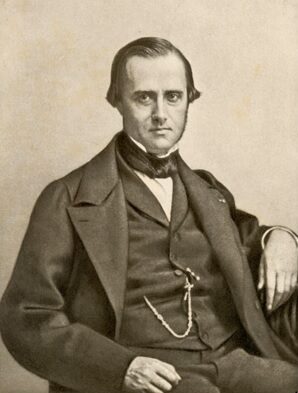
The term is named after Édouard Roche (French: [ʁɔʃ], English: ROSH), the French astronomer who first calculated this theoretical limit in 1848.
From the Wikipedia article “Roche limit” (en.wikipedia.org/wiki/Roche_limit), by its contributors, under CC BY-SA 4.0 (creativecommons.org/licenses/by-sa/4.0/). Copied 2026-11-17; not changed.
Confirmed Two sources agree. Cited One source, and it names where it got it. One source One source, without a reference of its own. Sources disagree The sources disagree. We show the best-supported value and keep theirs below.