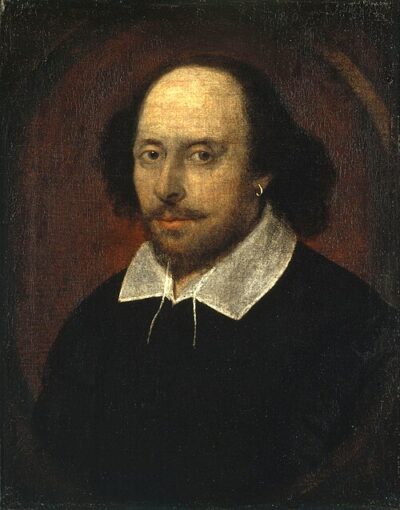
Romeo and Juliet
Romeo and Juliet is a tragedy by William Shakespeare. It came out in 1594. It is based on The Tragicall Historye of Romeus and Juliet.
- Came out
- 1590s (1594–1596)
- Written by
- William Shakespeare
- Genre
- tragedy
- Country of origin
- Kingdom of England
All 8 facts, and where they come from
Facts
8 facts · 0 confirmed by two sources · 3 cited · 4 from one source · 1 where the sources disagree
What’s different
- Came out: we show 1590s (1594–1596) (Sources disagree). Wikidata also lists 1597
Where this comes from
Papalocal keeps its own record. It started from these sources; what each one said is kept here as it was copied, so a change on their side never changes this page by itself. Tap one to read its version.
What Wikidata says · copied November 17, 2026 · revision 2552975141
- Described as
- tragedy by William Shakespeare
- Other names
- Una excelente tragedia engreída de Romeo y Iuliet, La excelentísima y lamentable tragedia de Romeo y Julieta, La tragedia de Romeo y Julieta
- What it is
- dramatic work
- Written by
- William Shakespeare
- Genre
- tragedy · 1 reference; melodrama · 1 reference
- Language
- English
- Country of origin
- Kingdom of England
- Based on
- The Tragicall Historye of Romeus and Juliet · 1 reference
- Came out
- 1590s (1594–1596) · 1 reference; 1597 · 1 reference
- Wikipedias with a page
- 141
Wikidata item Q83186 (wikidata.org/wiki/Q83186), public domain (CC0). Copied 2026-11-17.
What Wikipedia says · copied November 17, 2026 · revision 1383366614
The Tragedy of Romeo and Juliet, often shortened to Romeo and Juliet, is a tragedy written by William Shakespeare about the romance between two young Italians from feuding families. It was among Shakespeare's most popular plays during his lifetime and, along with Hamlet, is one of his most frequently performed. The title characters are regarded as archetypal young lovers.
Romeo and Juliet belongs to a tradition of tragic romances stretching back to antiquity. The plot is based on an Italian tale written by Matteo Bandello, translated into verse as The Tragical History of Romeus and Juliet by Arthur Brooke in 1562, and retold in prose in Palace of Pleasure by William Painter in 1567. Shakespeare borrowed heavily from both but expanded the plot by developing a number of supporting characters, in particular Mercutio and Paris. Believed to have been written between 1591 and 1595, the play was first published in a quarto version in 1597. The text of the first quarto version was of poor quality, however, and later editions corrected the text to conform more closely with Shakespeare's original.
Shakespeare's use of poetic dramatic structure (including effects such as switching between comedy and tragedy to heighten tension, the expansion of minor characters, and numerous sub-plots to embellish the story) has been praised as an early sign of his dramatic skill. The play ascribes different poetic forms to different characters, sometimes changing the form as the character develops. Romeo, for example, grows more adept at the sonnet over the course of the play.
Romeo and Juliet has been adapted numerous times for stage, film, musical, and opera venues. During the English Restoration, it was revived and heavily revised by William Davenant. David Garrick's 18th-century version also modified several scenes, removing material then considered indecent, and Georg Benda's Romeo und Julie omitted much of the action and used a happy ending. Performances in the 19th century, including Charlotte Cushman's, restored the original text and focused on greater realism. John Gielgud's 1935 version kept very close to Shakespeare's text and used Elizabethan costumes and staging to enhance the drama. In the 20th and into the 21st century, the play has been adapted to film in versions as diverse as George Cukor's Romeo and Juliet (1936), Franco Zeffirelli's Romeo and Juliet (1968), Baz Luhrmann's Romeo + Juliet (1996), and Carlo Carlei's Romeo & Juliet (2013).
From the Wikipedia article “Romeo and Juliet” (en.wikipedia.org/wiki/Romeo_and_Juliet), by its contributors, under CC BY-SA 4.0 (creativecommons.org/licenses/by-sa/4.0/). Copied 2026-11-17; not changed.
Confirmed Two sources agree. Cited One source, and it names where it got it. One source One source, without a reference of its own. Sources disagree The sources disagree. We show the best-supported value and keep theirs below.
Picture: Wikimedia Commons: Romeo and juliet brown.jpg · See Commons file page