Royal Academy of Art
The Royal Academy of Art is an art and design academy in The Hague, Netherlands. It was founded in 1682. It won the Koninklijk.
- Located in
- The Hague
- Country
- Netherlands
- Founded
- 1682
- What it is
- art academy
All 8 facts, and where they come from
Facts
8 facts · 0 confirmed by two sources · 5 cited · 2 from one source · 1 where the sources disagree
What’s different
- Founded: we show 1682 (Sources disagree). Wikidata also lists September 29, 1682 and 1933
Where this comes from
Papalocal keeps its own record. It started from these sources; what each one said is kept here as it was copied, so a change on their side never changes this page by itself. Tap one to read its version.
What Wikidata says · copied November 17, 2026 · revision 2568666083
- Described as
- art and design academy in The Hague, Netherlands
- Other names
- Королівська академія мистецтв, КАБК, Факультет мистецтва та дизайну, Університет мистецтв, Гаага, Royal Academy of Art, The Hague, KABK, Koninklijke Academie van Beeldende Kunsten, Koninklijke Academie van Beeldende Kunsten, Den Haag
- What it is
- art academy
- Founded
- September 29, 1682; 1682 · 1 reference; 1933 · 1 reference
- Ended
- 2024 · 2 references
- Headquarters
- The Hague · 2 references
- Located in
- The Hague · 2 references
- Country
- Netherlands · 3 references
- Awards
- Koninklijk · 1 reference
- Official website
- http://www.kabk.nl
- Wikipedias with a page
- 9
Wikidata item Q511291 (wikidata.org/wiki/Q511291), public domain (CC0). Copied 2026-11-17.
What Wikipedia says · copied November 17, 2026 · revision 1384571484
The Royal Academy of Art (Dutch: Koninklijke Academie van Beeldende Kunsten, KABK) is an art and design academy in The Hague, offering programs at both the HBO bachelor's and master's levels, as well as PhD programs.
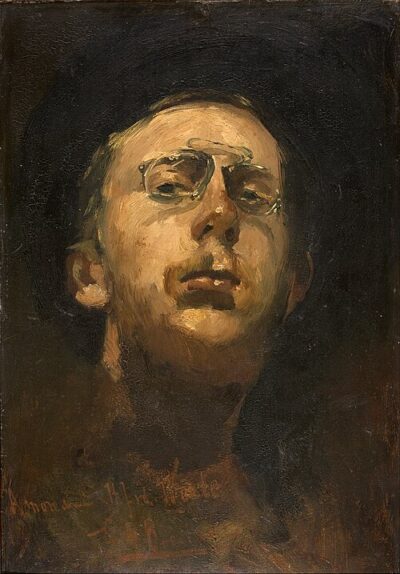
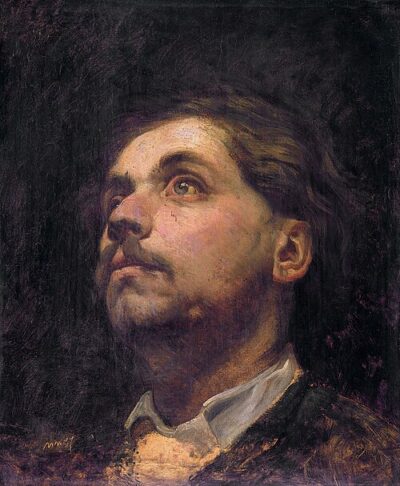
Succeeding the Haagsche Teeken-Academie (part of the Confrerie Pictura), the academy was founded on 29 September 1682, making it the oldest in the Netherlands and one of the oldest in the world. The academy has been the training ground for a number of significant artists of the Hague School. It was part of the art movement of Dutch Impressionism and in the immediate vicinity of the II. Golden Age of Dutch painting.
While training was strongly oriented towards the classic curriculum throughout much of the 19th century, the academy opened to modernism at the end of the 19th century. Influenced by the Bauhaus, the academy gradually shifted its focus toward a more contemporary art and design style. Within education, the focus on new technologies and new media has expanded dramatically, which is visible in new workplaces and facilities, but also in new study options such as ArtScience, Interactive/Media/Design and Non Linear Narrative. In 1957, in celebration of the academy's 250-year existence, it was awarded the predicate "royal".
Nowadays, it maintains close ties in its curriculum with its mother institution, the University of the Arts The Hague (HDK), as well as Leiden University, under the name "Academy of Creative and Performing Arts" (ACPA). As a result, students are able to follow several elective classes from all institutions falling under that umbrella. Furthermore, the academy's students are 68% international and the academy values this internationalization greatly. It adopts an international approach in its curriculum structure wherever possible.
From the Wikipedia article “Royal Academy of Art, The Hague” (en.wikipedia.org/wiki/Royal_Academy_of_Art,_The_Hague), by its contributors, under CC BY-SA 4.0 (creativecommons.org/licenses/by-sa/4.0/). Copied 2026-11-17; not changed.
Confirmed Two sources agree. Cited One source, and it names where it got it. One source One source, without a reference of its own. Sources disagree The sources disagree. We show the best-supported value and keep theirs below.
Picture: Wikimedia Commons: Royal Academy of Art, University of the Arts The Hague (2022) 02.jpg · See Commons file page