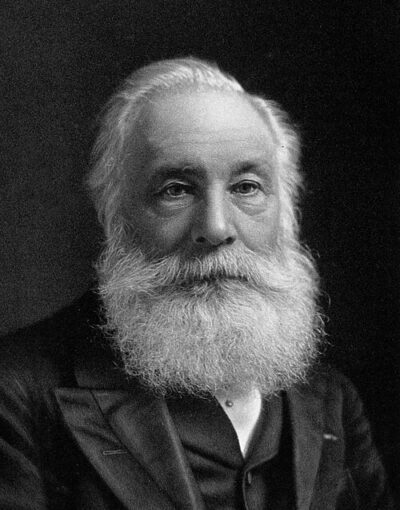
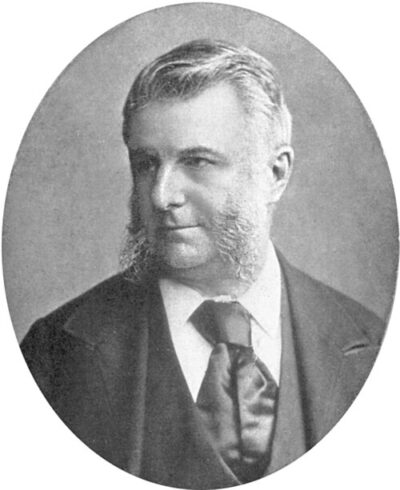
Royal College of Chemistry
The Royal College of Chemistry is a college in London 1845-1872.
- Located in
- City of Westminster
- Country
- United Kingdom
- Founded
- 1845
- What it is
- college
All 5 facts, and where they come from
Facts
5 facts · 0 confirmed by two sources · 0 cited · 5 from one source
Where this comes from
Papalocal keeps its own record. It started from these sources; what each one said is kept here as it was copied, so a change on their side never changes this page by itself. Tap one to read its version.
What Wikidata says · copied November 17, 2026 · revision 2535815983
- Described as
- college in London 1845-1872
- What it is
- college
- Founded
- 1845
- Ended
- 1872
- Located in
- City of Westminster
- Country
- United Kingdom
- Wikipedias with a page
- 4
Wikidata item Q7373975 (wikidata.org/wiki/Q7373975), public domain (CC0). Copied 2026-11-17.
What Wikipedia says · copied November 17, 2026 · revision 1376704888
The Royal College of Chemistry (RCC) was a college originally based on Oxford Street in central London, England. It operated between 1845 and 1872.
The original building was designed by the English architect James Lockyer in 1846 with the foundation stone being laid by Albert, Prince Consort on June 16, 1846.
The College was set up to teach practical chemistry. Many politicians donated funds to establish the college, including Benjamin Disraeli, William Gladstone and Robert Peel. It was also supported by Prince Albert.
The first director was August Wilhelm von Hofmann. Frederick Augustus Abel studied under von Hofmann. Sir William Crookes, Edward Divers and J. A. R. Newlands also attended the college.
The young William Henry Perkin studied and worked at the college under von Hofmann, but resigned his position after discovering the first synthetic dye, mauveine, in 1856. Perkin's discovery was prompted by his work with von Hofmann on the substance aniline, derived from coal tar, and it was this breakthrough which sparked the synthetic dye industry, a boom which some historians have labelled 'the second chemical revolution'.
The college was merged into the Royal School of Mines in 1853. It was the first constituent college of Imperial College London and eventually became the Imperial College Chemistry Department.
From the Wikipedia article “Royal College of Chemistry” (en.wikipedia.org/wiki/Royal_College_of_Chemistry), by its contributors, under CC BY-SA 4.0 (creativecommons.org/licenses/by-sa/4.0/). Copied 2026-11-17; not changed.
Confirmed Two sources agree. Cited One source, and it names where it got it. One source One source, without a reference of its own. Sources disagree The sources disagree. We show the best-supported value and keep theirs below.