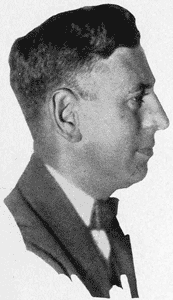
Rube Goldberg machine
Rube Goldberg machine is a Deliberately complex contraption.
All 2 facts, and where they come from
Facts
2 facts · 0 confirmed by two sources · 0 cited · 2 from one source
Where this comes from
Papalocal keeps its own record. It started from these sources; what each one said is kept here as it was copied, so a change on their side never changes this page by itself. Tap one to read its version.
What Wikidata says · copied November 17, 2026 · revision 2464581869
- Described as
- Deliberately complex contraption
- Other names
- Rube Goldberg device
- Named after
- Rube Goldberg
- Official website
- https://www.rubegoldberg.com/
- Wikipedias with a page
- 34
Wikidata item Q1139814 (wikidata.org/wiki/Q1139814), public domain (CC0). Copied 2026-11-17.
What Wikipedia says · copied November 17, 2026 · revision 1385837066
A Rube Goldberg machine, named after American cartoonist Rube Goldberg, is a chain reaction–type machine or contraption intentionally designed to perform a simple task in a comically overcomplicated way. First appearing in a cartoon for the New York Evening Mail, these machines consist of a series of simple unrelated devices; the action of each triggers the initiation of the next, eventually resulting in achieving a stated goal.
The term was used to describe complex contraptions, and was featured in the Random House Dictionary of the English Language. Such machines have been featured in popular culture (for example, a breakfast scene in Pee-wee's Big Adventure), used in education, and are the subjects of many different Rube Goldberg competitions. The term is used mainly in the US, but there are other forms of the expression that are similar to Rube Goldberg machines, such as the UK equivalent Heath Robinson contraptions.
From the Wikipedia article “Rube Goldberg machine” (en.wikipedia.org/wiki/Rube_Goldberg_machine), by its contributors, under CC BY-SA 4.0 (creativecommons.org/licenses/by-sa/4.0/). Copied 2026-11-17; not changed.
Confirmed Two sources agree. Cited One source, and it names where it got it. One source One source, without a reference of its own. Sources disagree The sources disagree. We show the best-supported value and keep theirs below.