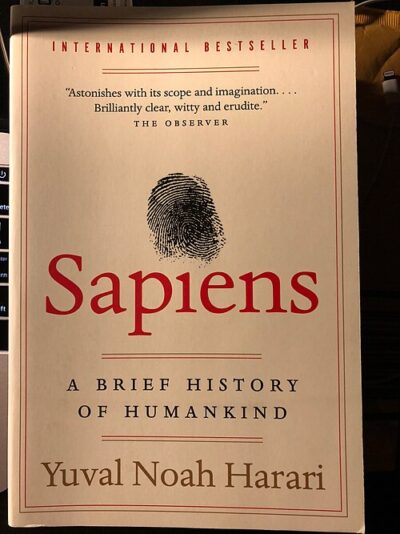
Sapiens: A Brief History of Humankind
Sapiens: A Brief History of Humankind is a 2011 non-fiction work by Yuval Noah Harari.
- Published
- 2011
- Written by
- Yuval Noah Harari
- Genre
- popularisation of science
- Country of origin
- Israel
All 10 facts, and where they come from
Facts
10 facts · 0 confirmed by two sources · 1 cited · 9 from one source
Where this comes from
Papalocal keeps its own record. It started from these sources; what each one said is kept here as it was copied, so a change on their side never changes this page by itself. Tap one to read its version.
What Wikidata says · copied November 17, 2026 · revision 2552533795
- Described as
- 2011 non-fiction work by Yuval Noah Harari
- Other names
- A Brief History of Humankind, Brief History of Humankind
- What it is
- written work
- Written by
- Yuval Noah Harari
- Publisher
- Devir · 1 reference
- Genre
- popularisation of science · 1 reference; anthropology
- Published
- 2011
- Language
- Hebrew
- Country of origin
- Israel · 1 reference
- Followed by
- Homo Deus: A Brief History of Tomorrow · 1 reference
- Official website
- https://www.ynharari.com/book/sapiens/ · 1 reference
- Wikipedias with a page
- 42
Wikidata item Q12411055 (wikidata.org/wiki/Q12411055), public domain (CC0). Copied 2026-11-17.
What Wikipedia says · copied November 17, 2026 · revision 1384404821
Sapiens: A Brief History of Humankind (Hebrew: קיצור תולדות האנושות, Qitzur Toldot ha-Enoshut) is a 2011 book by the Israeli military historian Yuval Noah Harari, based on a series of lectures he gave at the Hebrew University of Jerusalem. It was first published in Hebrew in Israel in 2011, and in English in 2014. The book surveys the history of humankind, beginning in the Stone Age and ending in the 21st century. The account relies on a fusion of the natural sciences with the social sciences.
From the Wikipedia article “Sapiens: A Brief History of Humankind” (en.wikipedia.org/wiki/Sapiens:_A_Brief_History_of_Humankind), by its contributors, under CC BY-SA 4.0 (creativecommons.org/licenses/by-sa/4.0/). Copied 2026-11-17; not changed.
Confirmed Two sources agree. Cited One source, and it names where it got it. One source One source, without a reference of its own. Sources disagree The sources disagree. We show the best-supported value and keep theirs below.
Picture: 宋世怡, via Wikimedia Commons · CC BY-SA 4.0