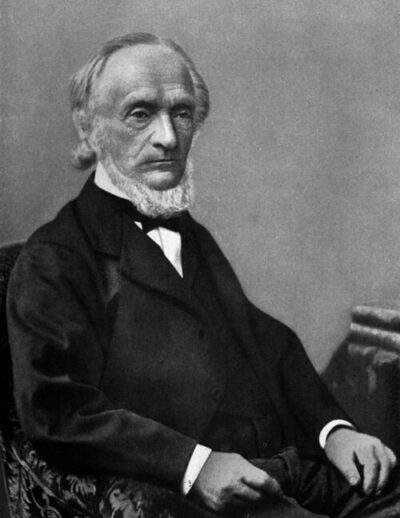
Schläfli orthoscheme
Schläfli orthoscheme is a simplex formed from a right-angled path.
All 1 facts, and where they come from
Facts
1 facts · 0 confirmed by two sources · 0 cited · 1 from one source
Where this comes from
Papalocal keeps its own record. It started from these sources; what each one said is kept here as it was copied, so a change on their side never changes this page by itself. Tap one to read its version.
What Wikidata says · copied November 19, 2026 · revision 2502354970
- Described as
- simplex formed from a right-angled path
- What it is
- mathematical concept
- Wikipedias with a page
- 3
Wikidata item Q7431764 (wikidata.org/wiki/Q7431764), public domain (CC0). Copied 2026-11-19.
What Wikipedia says · copied November 19, 2026 · revision 1380244764
In geometry, a Schläfli orthoscheme is a type of simplex. The orthoscheme is the generalization of the right triangle to simplex figures of any number of dimensions. Orthoschemes are defined by a sequence of edges (v0v1),(v1v2),…,(vd−1vd) that are mutually orthogonal. They were introduced by Ludwig Schläfli, who called them orthoschemes and studied their volume in Euclidean, hyperbolic, and spherical geometries. H. S. M. Coxeter later named them after Schläfli. As right triangles provide the basis for trigonometry, orthoschemes form the basis of a trigonometry of n dimensions, as developed by Schoute who called it polygonometry. J.-P. Sydler and Børge Jessen studied orthoschemes extensively in connection with Hilbert's third problem.
Orthoschemes, also called path-simplices in the applied mathematics literature, are a special case of a more general class of simplices studied by Fiedler, and later rediscovered by Coxeter. These simplices are the convex hulls of trees in which all edges are mutually perpendicular. In an orthoscheme, the underlying tree is a path.
In three dimensions, an orthoscheme is also called a birectangular tetrahedron (because its path makes two right angles at vertices each having two right angles) or a quadrirectangular tetrahedron (because it contains four right angles).
From the Wikipedia article “Schläfli orthoscheme” (en.wikipedia.org/wiki/Schläfli_orthoscheme), by its contributors, under CC BY-SA 4.0 (creativecommons.org/licenses/by-sa/4.0/). Copied 2026-11-19; not changed.
Confirmed Two sources agree. Cited One source, and it names where it got it. One source One source, without a reference of its own. Sources disagree The sources disagree. We show the best-supported value and keep theirs below.