

Scholz cabinet
Scholz cabinet is a cabinet in the German federal government headed by Chancellor Olaf Scholz (2021–2025).
- Founded
- December 8, 2021
- Country
- Germany
All 5 facts, and where they come from
Facts
5 facts · 0 confirmed by two sources · 0 cited · 5 from one source
Where this comes from
Papalocal keeps its own record. It started from these sources; what each one said is kept here as it was copied, so a change on their side never changes this page by itself. Tap one to read its version.
What Wikidata says · copied November 17, 2026 · revision 2548065731
- Described as
- cabinet in the German federal government headed by Chancellor Olaf Scholz (2021–2025)
- What it is
- Government of the Federal Republic of Germany
- Founded
- December 8, 2021
- Ended
- May 6, 2025
- Country
- Germany
- Office of
- Germany
- Wikipedias with a page
- 30
Wikidata item Q109712556 (wikidata.org/wiki/Q109712556), public domain (CC0). Copied 2026-11-17.
What Wikipedia says · copied November 17, 2026 · revision 1385979531
The Scholz cabinet (German: Kabinett Scholz, pronounced [kabiˈnɛt ʃɔlt͡s] ) was the 24th government of the Federal Republic of Germany during the 20th legislative session of the Bundestag. It was sworn in on 8 December 2021 following the 2021 federal election and dismissed on 25 March 2025, and acted in a caretaker role until 6 May 2025. It was preceded by the Fourth Merkel cabinet and succeeded by the Merz cabinet. It was led by Federal Chancellor Olaf Scholz and the cabinet ultimately composed of Scholz's Social Democratic Party (SPD) and Alliance 90/The Greens.
The Free Democratic Party (FDP) was a member of the cabinet until 7 November 2024, when the three-way coalition collapsed through Scholz's dismissal of FDP finance minister Christian Lindner. Scholz announced pursuing a snap election to be held in early 2025. On 16 December 2024, Scholz lost a vote of no confidence. On the same day, he requested the President of Germany to dissolve the Bundestag. President Frank-Walter Steinmeier granted the request and called new elections for 23 February 2025.
The coalition of SPD, Greens and FDP was an arrangement known as a "traffic light coalition" in German politics after the parties' traditional colours, respectively red, green and yellow, matching the colours of a traffic light (Ampel). This traffic light coalition-government was the first of its kind at the federal level in the history of the German federal republic.
In 2023, a mid-term review of the coalition agreement's implementation found that compared to the preceding grand coalition (Merkel IV), the traffic light government had achieved 38 instead of 53 per cent of its coalition promises, which is proportionally less, but with 174 instead of 154 fulfilled promises; it had actually achieved somewhat more in absolute terms. This applies to the government's major reform projects as well as to smaller government projects.
From the Wikipedia article “Scholz cabinet” (en.wikipedia.org/wiki/Scholz_cabinet), by its contributors, under CC BY-SA 4.0 (creativecommons.org/licenses/by-sa/4.0/). Copied 2026-11-17; not changed.
Confirmed Two sources agree. Cited One source, and it names where it got it. One source One source, without a reference of its own. Sources disagree The sources disagree. We show the best-supported value and keep theirs below.
Picture: Wikimedia Commons: 2021-12-07 Unterzeichnung des Koalitionsvertrages der 20. Wahlperiode des Bundestages by Sandro Halank–017.jpg · See Commons file page
People connected 8
Members
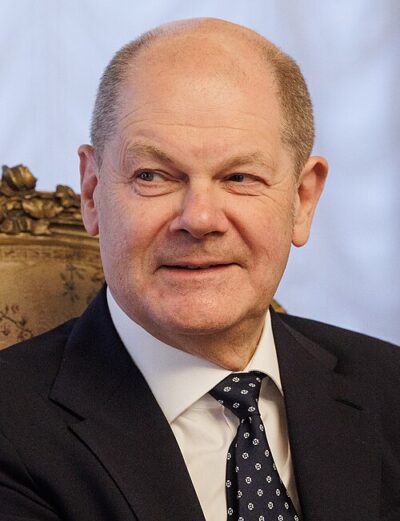 Olaf ScholzGerman politician (SPD), ninth Chancellor of the Federal Republic of Germany (2021–2025), Member of the Bundestag
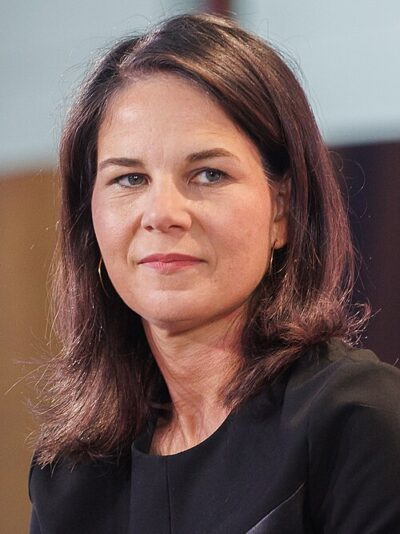 Annalena BaerbockGerman politician (born 1980)
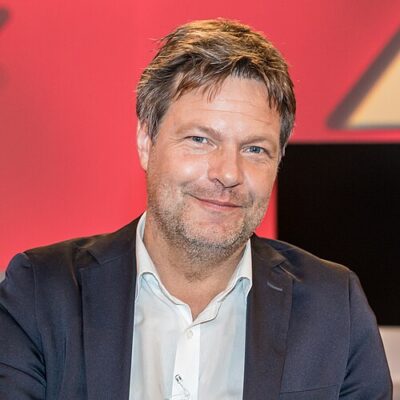 Robert HabeckGerman politician and writer, Vice Chancellor of Germany from 2021 to 2025 (born 1969)
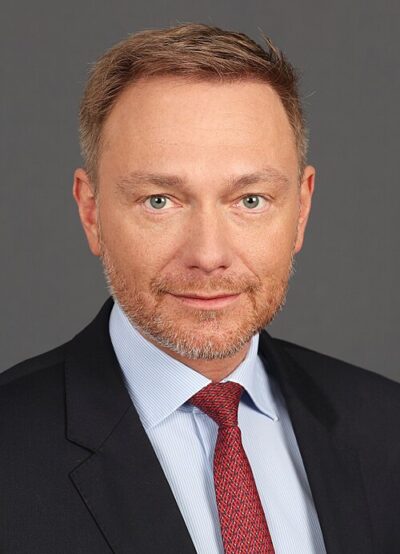 Christian LindnerGerman politician, former Federal Minister of Finance
 Cem ÖzdemirGerman environmentalist and statesperson (born 1965)
 Boris PistoriusGerman politician
 Christine LambrechtGerman politician (born 1965)
 Nancy FaeserGerman politician
