Seduction of the Innocent
Seduction of the Innocent is an essay by Fredric Wertham. It came out in 1954.
- Published
- 1954
- Written by
- Fredric Wertham
- Genre
- essay
- Country of origin
- United States
All 7 facts, and where they come from
Facts
7 facts · 0 confirmed by two sources · 0 cited · 7 from one source
Where this comes from
Papalocal keeps its own record. It started from these sources; what each one said is kept here as it was copied, so a change on their side never changes this page by itself. Tap one to read its version.
What Wikidata says · copied November 17, 2026 · revision 2438522656
- Described as
- essay by Fredric Wertham
- What it is
- written work
- Written by
- Fredric Wertham
- Publisher
- Rinehart & Company
- Genre
- essay
- Published
- April 19, 1954 · 1 reference
- Language
- English
- Country of origin
- United States
- Wikipedias with a page
- 10
Wikidata item Q1617734 (wikidata.org/wiki/Q1617734), public domain (CC0). Copied 2026-11-17.
What Wikipedia says · copied November 17, 2026 · revision 1384235387
Seduction of the Innocent is a book by German-born American psychiatrist Fredric Wertham, published in 1954, that warned that comic books were a harmful form of popular literature and a serious cause of juvenile delinquency. The book was taken seriously at the time in the United States, and was a minor bestseller that alarmed American parents and galvanized them to campaign for censorship. At the same time, a U.S. Congressional inquiry was launched into the comic book industry. Subsequent to the publication of Seduction of the Innocent, the Comics Code Authority was established by publishers to self-censor their titles. In the decades since the book's publication, Wertham's research has been disputed by scholars.
From the Wikipedia article “Seduction of the Innocent” (en.wikipedia.org/wiki/Seduction_of_the_Innocent), by its contributors, under CC BY-SA 4.0 (creativecommons.org/licenses/by-sa/4.0/). Copied 2026-11-17; not changed.
Confirmed Two sources agree. Cited One source, and it names where it got it. One source One source, without a reference of its own. Sources disagree The sources disagree. We show the best-supported value and keep theirs below.
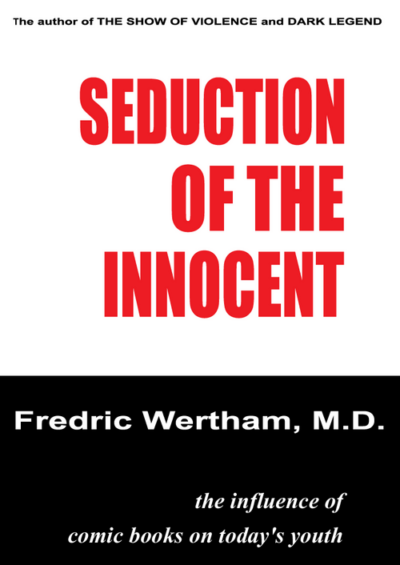
Picture: Original text by Fredric Wertham M.D., via Wikimedia Commons · Public domain